How VR improves the customer experience
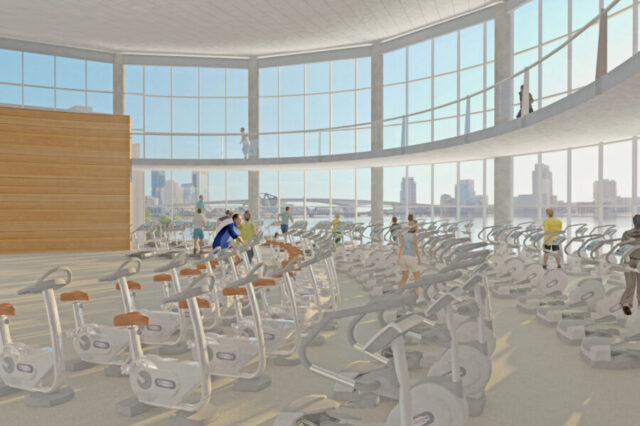
There’s a big difference between looking at a picture and being in a picture. When we think about new building developments or project proposals, we usually end up looking at pictures to help visualize the structures. They may be artful renderings or computer-generated graphics, or even three-dimensional models, but how we consume all of these tools remains the same: we just look at them.
That’s why virtual reality (VR) has so much value – not just for the AEC industry, but also for clients. For organizations looking to raise funds or get public buy-in for a project, VR walkthroughs give them a chance to provide potential donors, lawmakers, and investors with an immersive experience.
More and more industries are finding value in using VR, telling more captivating stories and showing greater detail to their audiences. Several charities are using the technology to garner more support. Even the United Nations created a series of short VR films highlighting some of the most pressing global challenges facing the organization, which helps raise awareness – and money.
Expect more and more uses for VR across different industries in the coming years. The Institute of Electrical and Electronics Engineers (IEEE) predicts that by 2020, the VR industry will be worth $30 billion, 15 times what it was worth in 2016.
With the help of game engine-driven VR, architects today can walk through a building, touch materials, study heights and depths and zero in on the tiniest of details, from carpet texture to real-time lighting. They can take their clients along every step of the virtual journey.
Instead of just looking at a design, you can be inside it. With VR technology, you can go from looking at rendered views on a monitor or easel to actually being in the building. Forget just knowing what a space will look like; you can experience what it will feel like.
The VR approach can also lead to faster changes with more client involvement. The team can pick fixtures out on demand, change materials on demand, and even move furniture around with a few clicks. Being able to adjust a design on demand takes away guess work and can help a client address any community concerns as quickly as possible.
These benefits aren’t limited to buildings either. The same technology can be displayed at public hearings for new transportation projects. For our Topsail Island, N.C., bridge replacement project, we were able to virtually create the new bridge and use a game engine to simulate several points of view, from riding in a car driving over the bridge to sailing on a ship in the river below.
Beyond using VR to sell a project to the public, clients can also use VR to show potential donors what they’re investing in. Donors can even see what their donated plaque on a wall could look like. It’s a great tool to generate interest, excitement, and engagement for a project.
There are many uses for VR, and the list continues to grow as our technology advances. It was once thought that these kinds of virtual experiences could only exist in our imaginations.
But, in fact, it seems that the only limits of VR are contained within our imaginations.
Related Insights
RS&H has received the Corporate Award of Excellence at the Northwest Chapter of the American Association of Airport Executives (NWAAAE) 2026 Annual Conference in Missoula, Montana.
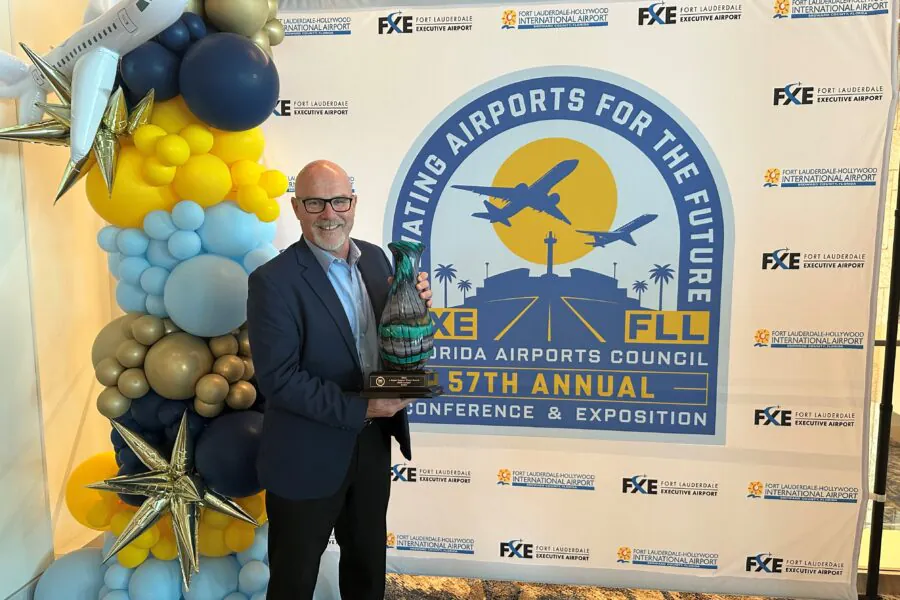
John Lengel Jr., PE, ENV SP, Vice President and National Discipline Leader at RS&H, received the 2026 Florida Airports Council J. Bryan Cooper Vision Award. The award recognizes his leadership and lasting contributions to aviation environmental stewardship, sustainability, and resilience.
Mike Rudzinski, AIA, NCARB, explores the trends shaping the next generation of airports, from smarter wayfinding and wellness-focused spaces to advanced air mobility, and how innovative terminal design is creating better passenger experiences.
Growing in Lafayette, RS&H combines local connection with national expertise—supporting the community through partnerships, student engagement, and transformative work at Lafayette Regional Airport.