Five Questions Airport Leaders Should Answer Before Siting a Vertiport

Advanced Air Mobility (AAM) is moving from a future-focused conversation to a practical airport-planning subject for airports: what role could AAM play here, and what would it take to support it?
The answer to that question vastly differs by airport. A vertiport may support a plethora of needs and opportunities, including but not limited to cargo and logistics, disaster response, agricultural operations, and regional passenger service. The opportunities differ based on airport type, location, users, and funding. For example, at a large commercial airport, a vertiport could become part of an intermodal passenger and cargo ecosystem. At a smaller or rural general aviation (GA) airport, AAM infrastructure may offer a way to strengthen emergency response, agricultural aviation, military readiness, regional logistics, and access to essential services.
In every case, a vertiport should be planned around a defined operating need—not simply the availability of new aircraft technology.
Before identifying a preferred site or advancing a concept, airport leaders should answer five questions.
1. Is There Demonstrable Demand and a Viable Business Case for a Vertiport?
A vertiport requires a credible market: customers or mission users who value the service, operators prepared to serve the location, and an economic model that can justify the capital, operating, and lifecycle costs of the facility.
This requires evaluating demand from two distinct but interdependent perspectives:
- AAM users: Individuals, businesses, public agencies, hospitals, logistics providers, agricultural operators, emergency-management organizations, military users, and other organizations that could use or benefit from AAM services.
- AAM operators: Aircraft operators, logistics firms, medical-service providers, charter companies, public-safety agencies, maintenance providers, FBOs, and other entities capable of operating aircraft, supporting the facility, or providing services from the site.
Demand may take many forms based on the airport’s characteristics and AAM use cases. The business cases may combine conventional passenger or cargo operating revenue with public-service value, agency contracts, grant funding, resilience benefits, or partnerships with hospitals, agricultural organizations, utilities, defense entities, or state agencies.
Airport leaders should evaluate both near-term and long-term demand, including identifying priority use cases, likely operators, anticipated activity levels, infrastructure and operating costs, potential revenue sources, and public benefits. A site may be technically or operationally feasible yet commercially weak if it lacks users, operator interest, access to a broader network, or a source of recurring revenue. Conversely, a rural site with modest flight volumes may still be strategically viable if it supports contracted medical delivery, public safety, agricultural operations, defense missions, or other services with measurable public value.
Key planning question: Is there a defined user base, likely operator interest, and a realistic revenue, funding, or public-benefit model that can support the facility over time?
2. Can AAM Traffic Fit into Existing Airspace and Flight Routes?
A vertiport site’s viability is based on whether an aircraft can safely arrive and depart without creating unacceptable disruption to existing flight operations. This is particularly important at airports where AAM operations would share the environment with Part 121 airline traffic, business aviation, flight training, helicopters, agricultural aircraft, military activity, or unmanned aircraft systems.
The central airspace-planning challenge is understanding how to design a practical operating concept that enables AAM vehicles to use existing airspace, routes, communications practices, and traffic-management systems in a way that is safe, predictable, and compatible with current operations.
At a large commercial airport, this may mean developing AAM arrival and departure procedures that avoid runway protection zones, approach and departure paths, final-approach fixes, missed-approach corridors, aircraft taxi routes, and high-workload air traffic control sectors.
Potential strategies may include preferred arrival and departure corridors, designated transition points, altitude or directional routing, time-based procedures, and alternate routes for weather or changing operating conditions.
Early engagement with air traffic control and airport operators is essential. These stakeholders understand how the airport and surrounding airspace actually function on a day-to-day basis—including informal traffic flows, weather-driven operating changes, seasonal activity, and peak-period constraints that may not be visible in a desktop review.
Airspace and operational analysis should therefore be completed before a final site selection is made. A site that is easy to develop from a landside perspective may be difficult to operate from an airspace perspective. Conversely, a site with a slightly more complex infrastructure solution may offer safer, more efficient, and less disruptive flight paths.
Key planning question: Can AAM aircraft use safe, predictable routes that preserve the safety, capacity, and efficiency of current airport traffic?
3. Does the Vertiport Site Have the Right Infrastructure for the Intended Purpose?
A vertiport is more than just a landing area: it may jointly function as a logistics hub, emergency-response asset, aircraft base, energy facility, and—where applicable—passenger terminal. The required infrastructure—and space required—depends on the purpose(s).
For many electric aircraft concepts, electrical capacity will be a central siting component. Aircraft charging may require substantial utility service, distribution equipment, energy-management systems, resiliency measures, and potentially on-site battery storage or energy generation. Actual demand will vary based on aircraft type, battery capacity, charging architecture, utilization rate, ambient conditions, and operational schedule.
However, power is only part of the infrastructure question. A cargo, aeromedical, agricultural, military, or emergency-response vertiport may need very different facilities than a passenger-oriented site. At a passenger-focused site, proximity to terminals and multimodal transportation may be the defining advantage. At a cargo site, the priority may instead be direct truck access; at a medical site, proximity to a hospital or emergency services base is of the utmost importance. Depending upon the site’s use, room for expansion, lower land costs, hangar availability, or access to agricultural and industrial users may also be requirements.
Key planning question: Can the site provide the energy, access, safety systems, support facilities, and operational reliability that the specific purpose requires?
4. How Does the Vertiport Fit into Your Airport’s Long-Term Plan?
A vertiport should strengthen—not constrain—the airport’s long-term development strategy.
For a major commercial airport, this means considering compatibility with other projects like terminal expansion, roadway capacity, parking, rental-car facilities, transit connections, cargo development, aircraft gates, ramp space, and future airfield improvements. For a GA airport, it means understanding how AAM can strengthen the airport’s role as a community asset.
The best near-term site may not be the best permanent site. Airports may benefit from a phased strategy that separates an early demonstration, training, cargo, or public-service facility from a larger long-term vertiport integrated with future terminal, logistics, or community-development projects. This helps preserve flexibility as aircraft certification, regulations, commercial operating models, energy needs, and public demand continue to evolve.
Key planning question: Does this vertiport reinforce the airport’s long-term goal while preserving flexibility for other aviation and development priorities?
5. Is There a Credible Path to Vertiport Approval, Funding, and Sustained Operations?
A technically feasible vertiport is not automatically an implementable project. Airport leaders should understand the approval pathway, stakeholder environment, funding strategy, ownership structure, and long-term responsibility for operating and maintaining the facility.
Depending on the site and mission, a vertiport project may involve coordination with multiple different cross-functional teams, such as aviation authorities, airport sponsors, local planning agencies, building and fire officials, utilities, transportation departments, emergency-management agencies, hospitals, military partners, agricultural users, aircraft operators, freight providers, and neighboring communities.
A statewide AAM strategic plan can help airports place individual vertiport projects in a coordinated regional context. Instead of treating each location as an isolated opportunity, a statewide plan can identify priority use cases, rural and urban connectivity gaps, medical and public-service needs, cargo corridors, utility requirements, regulatory barriers, military and emergency-response opportunities, and phased investment priorities.
This is especially valuable for rural airports. A single rural vertiport may not support a standalone passenger business case, but it may be strategically important as part of a statewide network.
Key planning question: How does it fit into the statewide plan and priorities—and is there a realistic path from an initial concept to sustained operations?
From AAM Interest to Vertiport Readiness
AAM will not look the same at every airport. At some airports, the first use case may be passenger service. At others, the first viable operation may be more task-oriented.
Rather than starting with a generic vertiport concept, airport leaders should begin with the airport’s goals, community needs, airspace and infrastructure constraints, and potential role within a broader regional or statewide AAM network.
A practical next step is a vertiport readiness and siting assessment. This assessment can evaluate candidate locations, define priority missions, validate AAM user and operator demand, identify airspace and infrastructure constraints, assess how AAM traffic can safely integrate into existing flight routes, estimate energy and site-development needs, evaluate stakeholder and regulatory requirements, and establish a phased path from early operations to long-term implementation.
Our team at RS&H helps airports, public agencies, and private partners plan, design, deliver, and operationalize vertiports and broader AAM systems. We support the full continuum—from statewide AAM strategic plans and airport readiness assessments to site selection, market and business-case analysis, airspace and operational analysis, infrastructure planning, design, delivery, and concepts of operations.
If your airport is considering how AAM could support passenger mobility, cargo, aeromedical delivery, agriculture, emergency response, military activity, or other community needs, reach out to start a conversation about integrating AAM into your airport strategy.
About the Author
 Torrie Meliska
Advanced Air Mobility (AAM) Technical Lead
Torrie Meliska specializes in Advanced Air Mobility infrastructure planning, vertiport development, and operations. Her experience spans industry-leading work in aviation standards, vertiport network planning, airport integration, and NASA-funded AAM research.
Related Insights
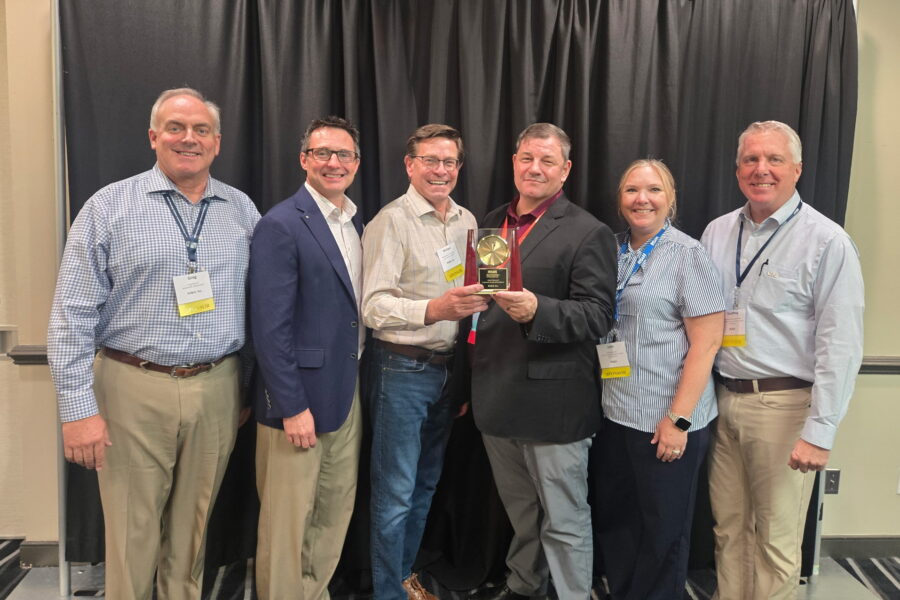
RS&H has received the Corporate Award of Excellence at the Northwest Chapter of the American Association of Airport Executives (NWAAAE) 2026 Annual Conference in Missoula, Montana.
John Lengel Jr., PE, ENV SP, Vice President and National Discipline Leader at RS&H, received the 2026 Florida Airports Council J. Bryan Cooper Vision Award. The award recognizes his leadership and lasting contributions to aviation environmental stewardship, sustainability, and resilience.

Mike Rudzinski, AIA, NCARB, explores the trends shaping the next generation of airports, from smarter wayfinding and wellness-focused spaces to advanced air mobility, and how innovative terminal design is creating better passenger experiences.

Growing in Lafayette, RS&H combines local connection with national expertise—supporting the community through partnerships, student engagement, and transformative work at Lafayette Regional Airport.