Behind the Envision Silver Award: DEN South Worldport Project
The South Worldport project at Denver International Airport (DEN) received an Envision Silver Award. RS&H helps airports achieve their sustainability and resilience goals using the Institute of Sustainable Infrastructure’s (ISI) Envision® Sustainability Rating System (Envision). Envision® is a rating system for assessing the sustainability of infrastructure projects based on a system of credits, like the LEED framework for buildings. Within the Envision® framework, there are five credit categories: Quality of Life, Leadership, Resource Allocation, Natural World, and Climate and Resilience. Project teams can choose to pursue any of the established credits and based on the level of achievement in each credit, the project will be awarded a score.
This certification was supported and made possible by DEN’s and RS&H’s previous work developing the airport-wide Climate Vulnerability and Risk Assessment and the developed adaptation strategies in the Climate Adaptation Plan (CAP). The South Worldport project team then applied the results to the project, using Envision to formalize, document, and verify how resilience was incorporated into project planning, design and construction.
We sat down with Cassidy Nosenzo, ENV SP, CC-P, who served as the Lead ENV-SP on the South Worldport project, to discuss how the airport’s climate resilience planning informed the work and how the Envision framework was applied. Cassidy is a Consultant in RS&H’s Environmental Stewardship & Resiliency practice, supporting sustainability and resilience efforts for clients across the country. Her experience includes sustainability management planning, Envision projects, and climate risk and vulnerability assessments.
What is the South Worldport project, and what were the key drivers behind for the Denver International Airport?
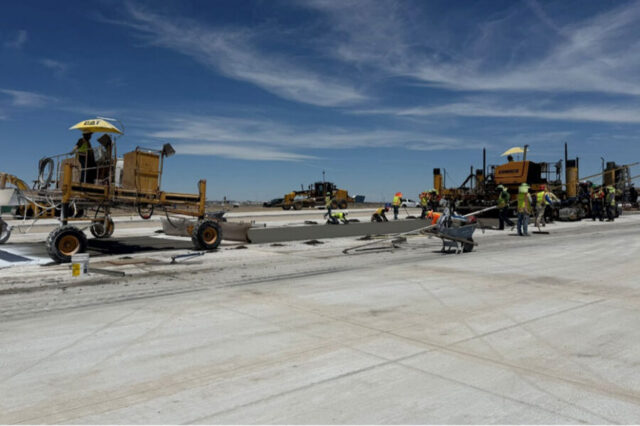
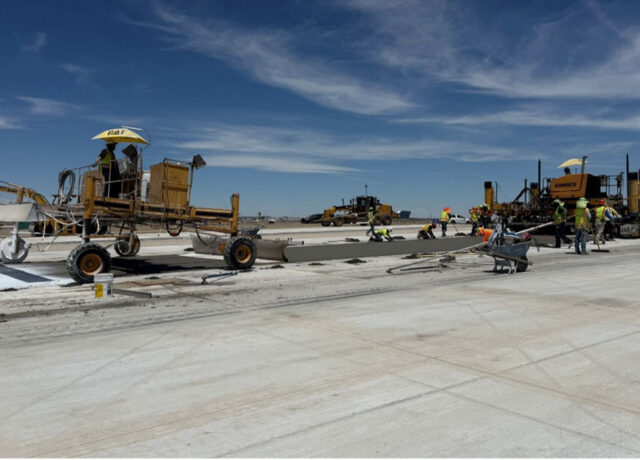
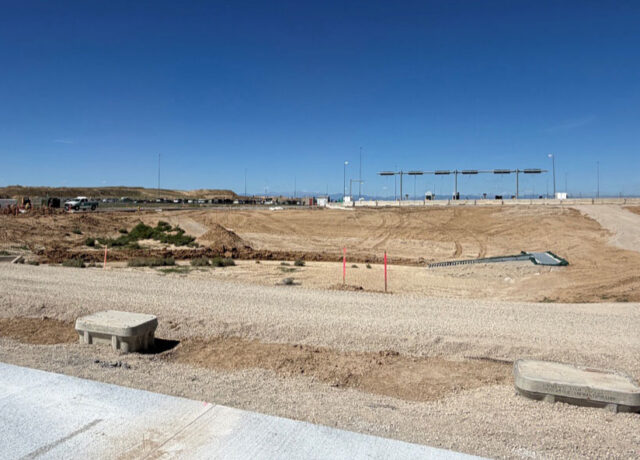
The South Worldport (SWP) economy parking lot is currently under construction at Denver International Airport (DEN). RS&H designed the project to help DEN meet growing passenger demand. The new lot will provide 5,200 parking spaces, replacing parking spaces displaced by construction of a new consolidated rental car facility and resulting in a net gain of approximately 2,000 spaces.
The SWP project features:
- A bus lane
- Concrete entrance
- Exit lanes connecting to N. Elk Street and Jackson Gap Road
- New traffic signal at N. Elk Street and E 75th Avenue
- Entrance and exit gate infrastructure
- Bus shelters
- Overhead lighting
- Electric vehicle charging infrastructure
Utility improvements consist of new drainage infrastructure, underground electrical systems to support both planned and future needs, and waterline and fure hydrant installation for fire suppression.
Why was sustainability and resilience important to South Worldport from the beginning?
IN 2025, DEN was fourth busiest airport in the United States and the tenth busiest in the world and DEN is expanding its facilities to meet increasing demand. With this expansion, the airport is committed to strategically considering the long-term economic, social and environmental impacts of its activities. – closely monitoring their energy use and waste reduction, incorporating green construction, and having over 50 MW capacity of on-site solar arrays. DEN has a comprehensive sustainability programs – closely monitoring their energy use and waste reduction, incorporating green construction, and having over 50 MW capacity of on-site solar arrays. Further, RS&H recently supported DEN in completing a CRVA to identify airport-wide climate vulnerabilities and used those results to develop a CAP for future mitigation efforts. Given the precedent set by DEN at the organizational level, RS&H supported the airport in embedding sustainability and resilience into the design of the SWP project.
How did DEN’s Climate Risk and Vulnerability Assessment provide a foundation for the project?
To develop DEN’s CRVA, RS&H worked with airport staff to identify critical airport assets and operations needed to meet DEN’s minimum operational standards. This process required a significant amount of stakeholder engagement, working with dozens of departments across DEN to better understand criticality. RS&H then evaluated DEN’s critical assets and operations in the context of climate threats to understand how future changes in regional climate might affect the airport. Climate threats evaluated include temperature, precipitation, snowpack, wind, lightning, wildfires, and extreme events. The assessment included DEN’s existing adaptive capacity, or its existing redundancies and backup systems that allow it to recover and evolve after an impact.
How did the Climate Adaptation Plan help bridge the gap between identifying vulnerabilities and making project-level decisions?
The DEN CAP provides a framework with actionable strategies to increase DEN’s resilience to climate change. RS&H took the vulnerabilities identified in the CRVA and worked collaboratively with DEN stakeholders to develop adaptation actions to minimize DEN’s vulnerability. Actions developed for the CAP were a combination of asset/operation-specific actions (e.g. consider future rainfall projections in drainage design) and organization wide actions (e.g. updating design standards). The final CAP includes strategies for DEN to implement, including integrating resilience in capital improvement planning, developing resilience guidance for envision, and expanding resilient pavement design criteria. These actions were developed to create a standard for incorporating resilience considerations in all projects at DEN.
How did Envision allow the team to take DEN’s airport-wide resilience work and apply it specifically to South Worldport?
Envision provided a structured process for translating DEN’s airport-wide climate risk findings into project-specific considerations. We used the CRVA’s climate science and assessment results as a foundation, then examined how those threats could affect SWP’s pavement, drainage, shuttle shelters, electrical infrastructure, and parking operations. The Envision resilience credits guided us from identifying vulnerabilities and evaluating risk to establishing resilience goals and documenting how the design addressed those risks. This effort allowed us to build on DEN’s existing work , while making the analysis specific to the project’s function and long-term performance.
Did the Envision process identify or elevate any considerations that might otherwise have been overlooked?
Yes, Envision helped broaden the discussion beyond the physical infrastructure within the parking lot. We considered how the project depends on surrounding transportation networks, utilities, and airport operations, as well as how disruptions could affect customers and staff. It also expanded the assessment beyond climate threats to include non-climate hazards. One connection identified through the assessment was the relationship between drought and drainage: extended dry periods can contribute to dust and sediment accumulation in drainage elements, which can reduce drainage performance when rainfall returns. Bringing that issue into the assessment elevated the importance of maintenance alongside design as part of the project’s resilience approach.
Can you give an example of how climate risk information influenced a design or operational decision?
One example is how we evaluated the parking lot’s pavement material. The pavement is concrete rather than asphalt, and the resilience assessment documented how that choice supported long-term performance. In addition to its durability and reduced maintenance needs, concrete’s greater reflectivity can help mitigate urban heat island effect, a consideration for a large surface parking lot exposed to extreme temperatures. The assessment also connected drought-related sediment accumulation with drainage maintenance requirements. These examples show how climate risk information helped evaluate and validate design choices while identifying operational practices needed to preserve their effectiveness.
How did Envision help different disciplines and DEN stakeholders collaborate around resilience?
The Envision framework allowed the design team, DEN stakeholders, and the contractor to have a common framework for discussing resilience. Through project-specific workshops, we brought together engineering, sustainability, parking, environmental, and operations and maintenance perspectives to review risks and potential responses. A scenario-based exercise helped clarify which risks DEN considered acceptable and which required mitigation. We then prioritized strategies based on their potential to reduce risk, affordability, and feasibility. This activity connected the technical assessment with input from stakeholders who would operate and maintain the facility, helping confirm that the resulting strategies were relevant and implementable.
What does South Worldport demonstrate about how DEN can incorporate climate resilience into future capital projects?
South Worldport provides an example of how airport-wide resilience planning can be applied to individual capital projects. DEN’s CRVA provides a shared understanding of climate threats, while the project-level assessment determines what those threats mean for specific infrastructure and operations. Envision provides the structure to evaluate risks, engage stakeholders, prioritize practical responses, and document how those responses are incorporated into the project. Resilience does not always require a separate or complex solution; it can also mean selecting durable materials, validating existing design features, and connecting maintenance practices to identified risks. South Worldport illustrates how those decisions can become an intentional, documented part of project delivery.
At RS&H, we help airport owners apply the ISI’s Envision rating system to integrate sustainability and resilience into infrastructure planning, design and construction. Our experience includes feasibility studies, benchmarking, program guidance and support for project verification.
Related Insights
A vertiport should be planned around a defined operating need—not simply the availability of new aircraft technology. Before identifying a preferred site or advancing a concept, airport leaders should answer five questions.

RS&H has received the Corporate Award of Excellence at the Northwest Chapter of the American Association of Airport Executives (NWAAAE) 2026 Annual Conference in Missoula, Montana.
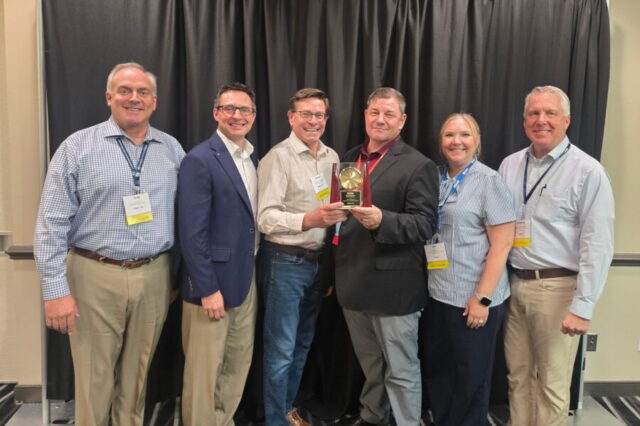
John Lengel Jr., PE, ENV SP, Vice President and National Discipline Leader at RS&H, received the 2026 Florida Airports Council J. Bryan Cooper Vision Award. The award recognizes his leadership and lasting contributions to aviation environmental stewardship, sustainability, and resilience.
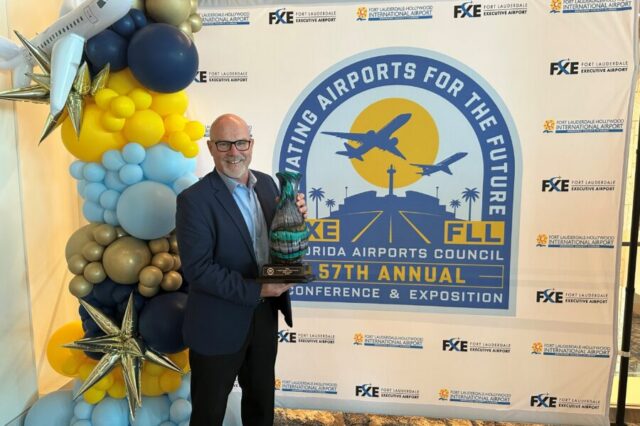
Mike Rudzinski, AIA, NCARB, explores the trends shaping the next generation of airports, from smarter wayfinding and wellness-focused spaces to advanced air mobility, and how innovative terminal design is creating better passenger experiences.