
Navigating Modern Roundabout Design: Avoiding Common Pitfalls
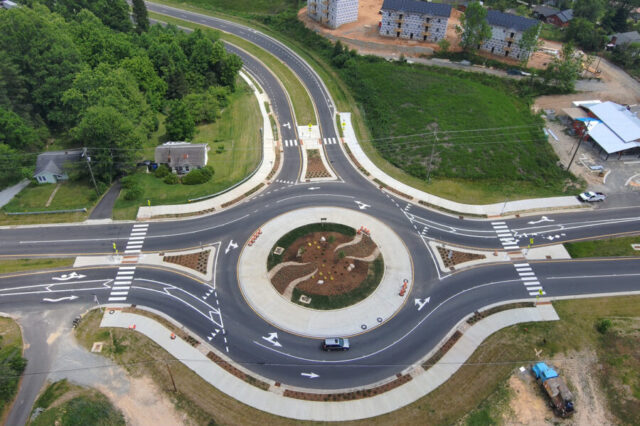
Modern roundabout design improves safety, traffic flow, and long-term operational efficiency when guided by proven standards and context-sensitive planning. Successful roundabout design requires balancing geometry, speed management, multimodal safety, and public understanding—while adhering to established roundabout design guidelines and standards used by local and state agencies. This article explores common pitfalls in roundabout design and offers practical insights to help municipalities and transportation professionals design safer, more efficient modern roundabouts.
What Are the Benefits of Roundabouts?
Modern roundabouts improve intersection performance by significantly enhancing safety, increasing traffic capacity, reducing long-term costs, and supporting sustainable, resilient transportation systems through lower speeds, fewer conflict points, and continuous traffic flow.

As the demand for transportation improvements rises due to aging infrastructure and growth, RS&H consistently integrates resilient and sustainable alternative intersections into its project designs. One such innovation is the modern roundabout, which is gaining popularity in the United States. The number of roundabouts has surged from approximately 50 in 1998 to an estimated 8,800 in 2021. [1] This is due to the many benefits they demonstrate, including:
 Safety Improvements
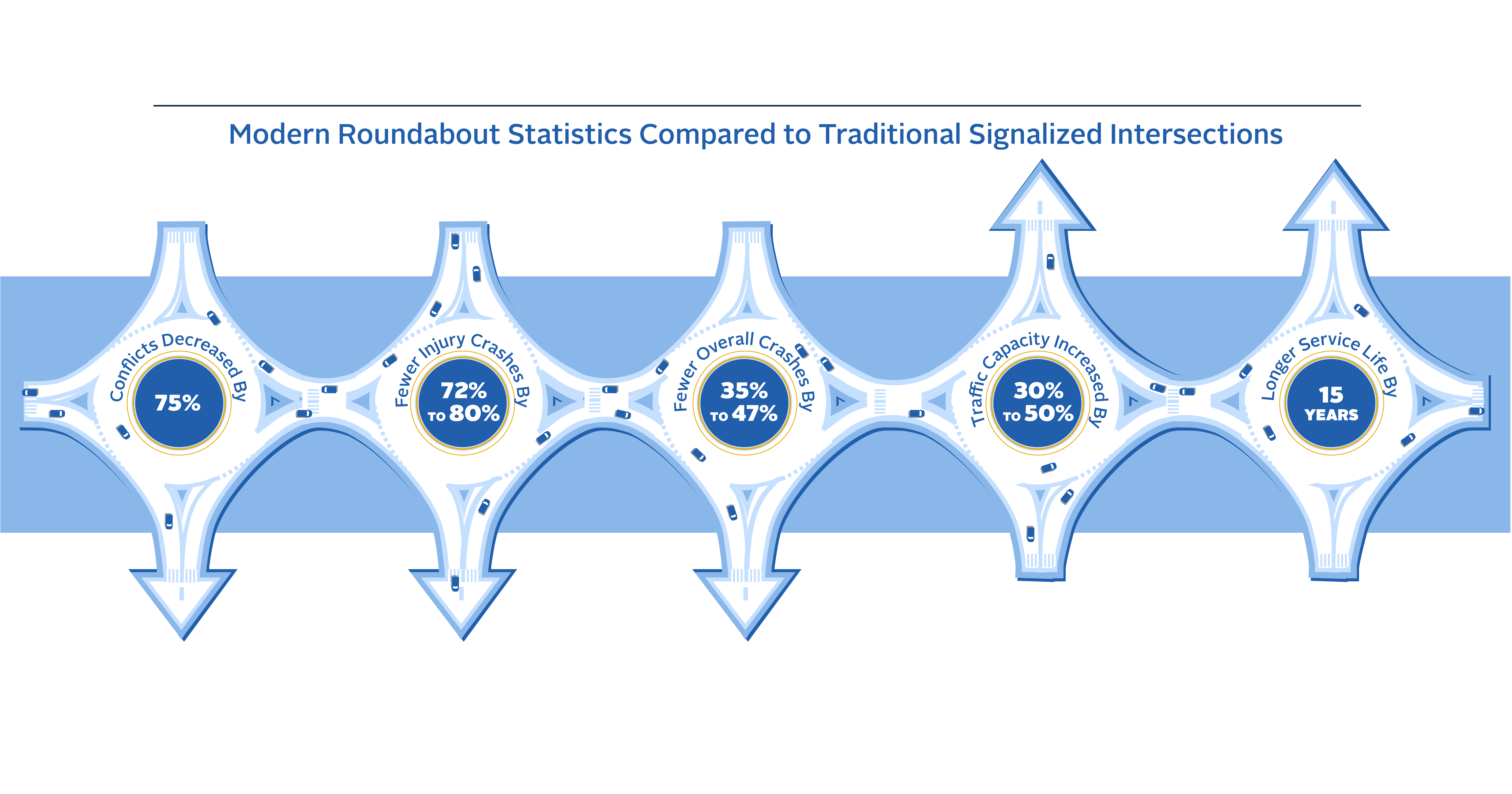
When designed appropriately, roundabouts have been proven to reduce severe crashes by lowering conflict points (vehicle-to-vehicle or vehicle-to-pedestrian) from approximately 32 in traditional 4-way intersections to eight using modern single-lane roundabouts. Since vehicles enter a roundabout at an angle and lower speeds, it reduces the possibility of a highly fatal T-bone or head-on accident, which is most prevalent in traditional intersections. Studies conducted in the United States show a 72-80% reduction in injury crashes and a 35%-47% reduction in overall crashes compared to traditional intersections. [2]
 Capacity Improvements
Roundabouts also improve capacity and operations by promoting a continuous flow of traffic, allowing more vehicles to travel through the intersection. Federal Highway Administration (FHWA) studies indicate that roundabouts can increase traffic capacity by 30 to 50 percent compared to traditional intersections. [3]
 Lower Costs
While the cost of a single-lane roundabout may have the potential for increased right-of-way, they are comparable to a new signalized intersection and often prove more economical in the long run. They reduce maintenance expenses by eliminating the need for annual traffic signal hardware, maintenance, and electrical costs. Additionally, the service life of a roundabout is approximately 25 years, compared to just 10 years for a typical traffic signal. [2]
 Sustainability and Resilience
Roundabouts are also resilient in the fact that there is no disruption to traffic flow during a power outage and the continuous flow reduces fuel consumption and emissions.
What Are Common Pitfalls in Roundabout Design?
Common pitfalls in roundabout design stem from skipping established design processes, overlooking context and performance tradeoffs, and failing to address speed control, lane configuration, multimodal safety, visibility, lighting, signage, and accurate modeling—leading to congestion, safety risks, and costly rework.
As more roundabouts are implemented across the United States, more data is being accumulated while standards and guidelines continue to be revised and developed to assist in successfully designing and installing these facilities. RS&H experts have identified common pitfalls to avoid during planning and design of roundabouts that will alleviate/eliminate causes of traffic congestion, safety hazards, inefficient traffic flow, and cost overruns, including:
Overlooking the Benefits and Tradeoffs
Ineffective decision-making can arise if project outcomes and context are not identified early. Unique project goals necessitate proper performance measures to evaluate benefits and trade-offs. Early completion of this step helps refine suitable concepts by discarding mediocre ones.
Deviation from an Established Design Process
The fast-paced, competitive Architectural Engineering and Construction industry often pressures teams to meet unrealistic deadlines, leading to deviations from established design processes. Such shortcuts can overlook critical steps, increasing project failure risk.
Lack of Contextual Sensitivity
Failure to consider nearby facilities, like warehouses with semi-trucks, can lead to improper lane widths. Accurate assessment of the surrounding area and vehicle types is crucial for proper roundabout sizing.
Not Determining the Fastest Path
Ignoring a vehicle’s fastest path in roundabout design can result in crashes due to uncontrolled speed variations. Incorporating speed control design features for optimal vehicle movement is essential.
Poor Lane Configurations and Markings
Inadequate understanding of travel modes and their interaction with the roadway network can lead to confusing lane assignments and unclear markings, increasing crash and congestion risks.
Ineffective Pedestrian and Bicycle Accommodations
Poor assessment of pedestrian crossings, traffic speed, and driver cognitive demands (e.g., drivers seeking gaps in traffic) can result in ineffective pedestrian accommodations and limited cyclist accessibility.
Visibility and Sightline Issues
Maximum visibility and clear sightlines are crucial for safety in roundabout design. Obstructions on the central island can hinder drivers’ ability to see oncoming traffic, affecting safe entry decisions.
Lack of Proper Lighting and Visibility
Adequate lighting and reflective markings enhance safety by improving visibility for vehicles and pedestrians, especially at curves where headlights may be insufficient.
Lack of Advance Warning Signs and Marking
Insufficient warnings can lead to higher approach speeds, elevating the risk of crashes and their severity. Early and adequate warnings help drivers reduce speed and comprehend guiding signs for safe navigation.
Poor 3D Modeling
Inaccurate 3D models can cause significant construction issues, such as mismatched elevations. Precise modeling promotes accuracy, consistency, and early identification of design flaws. It also facilitates effective communication and coordination with stakeholders, and compliance with safety and design standards.
What Are Strategies to Avoid Common Roundabout Pitfalls?
Common roundabout design pitfalls can be avoided by conducting thorough site and traffic analyses, following established roundabout design standards and guidelines, incorporating stakeholder input, and engaging communities early to ensure context-sensitive, safe, and widely accepted designs.
This is not a comprehensive guide to roundabout design. There are many other factors to watch out for when selecting, designing, and implementing a roundabout. But the common pitfalls can be avoided by utilizing the following strategies:
Conducting a Thorough Site Analysis and Traffic Study
A comprehensive site and traffic analysis is crucial to determining the appropriate improvement application for an intersection. This will help establish the project context including the specific characteristics (purpose and need, goals, users, modal priority), project type (new, reconstruction, improvements), and project influences (context, environment, community, facility type). This step will set the stage for the development of the project.
Using Design Guidelines and Best Practices
As more and more roundabouts are constructed across the United States, data is driving ongoing revisions and developments in standards and guidelines that will aid in the successful design and installation of these facilities. Analyzation of real-world data and incidents of successes and failures in roundabout design has informed the development of these documents. These guidelines, reports, and manuals, including the latest NCHRP Research Report 1043, FHWA’s Roundabouts: An Informational Guide, and client-based manuals such as TxDOT’s Roadway Design Manual, should not be taken for granted. They contain a wealth of information, including established design processes that guide through every stage from start to finish.
Incorporating Feedback from Stakeholders and User Groups
Stakeholders are critical to a design’s success. Early identification of stakeholders to gather input and understand the project context will help guide decisions, advance project activities, and promote support. For example, proactive outreach to the businesses in the area gets them involved in the design process and will result in a roundabout that will work for the regular users.
Community Familiarity and Acceptance
Community engagement is important throughout the whole process to gather input and feedback and educate and inform. It is critical to raise awareness of the benefits the roundabout will provide and educate on roundabout navigation and best practices to gain acceptance and confidence from the community who will be using the roundabout regularly.
Driven to Care: A Commitment to Safety, Innovation, and Sustainability
RS&H is transforming transportation infrastructure with innovative, safety-focused solutions. We prioritize efficiency and sustainability and use and integrate the latest technologies. Partner with RS&H to elevate infrastructure projects with cutting-edge designs and make a lasting impact on communities across the United States. Reach out to learn how our team can support your goals.
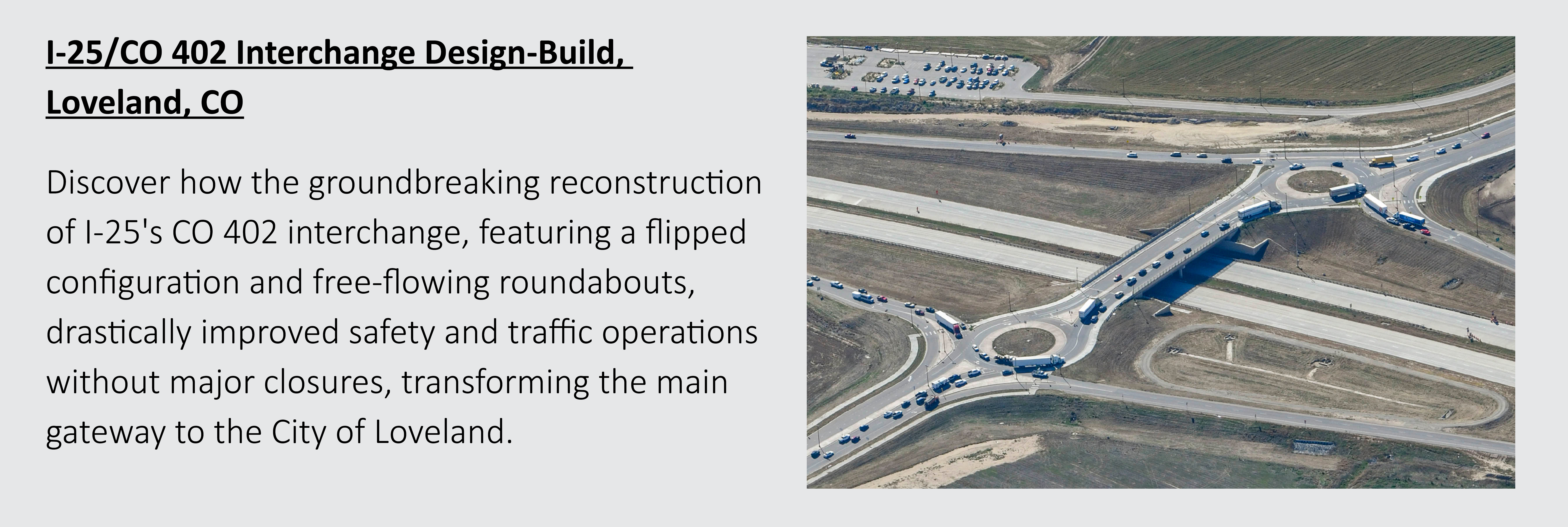
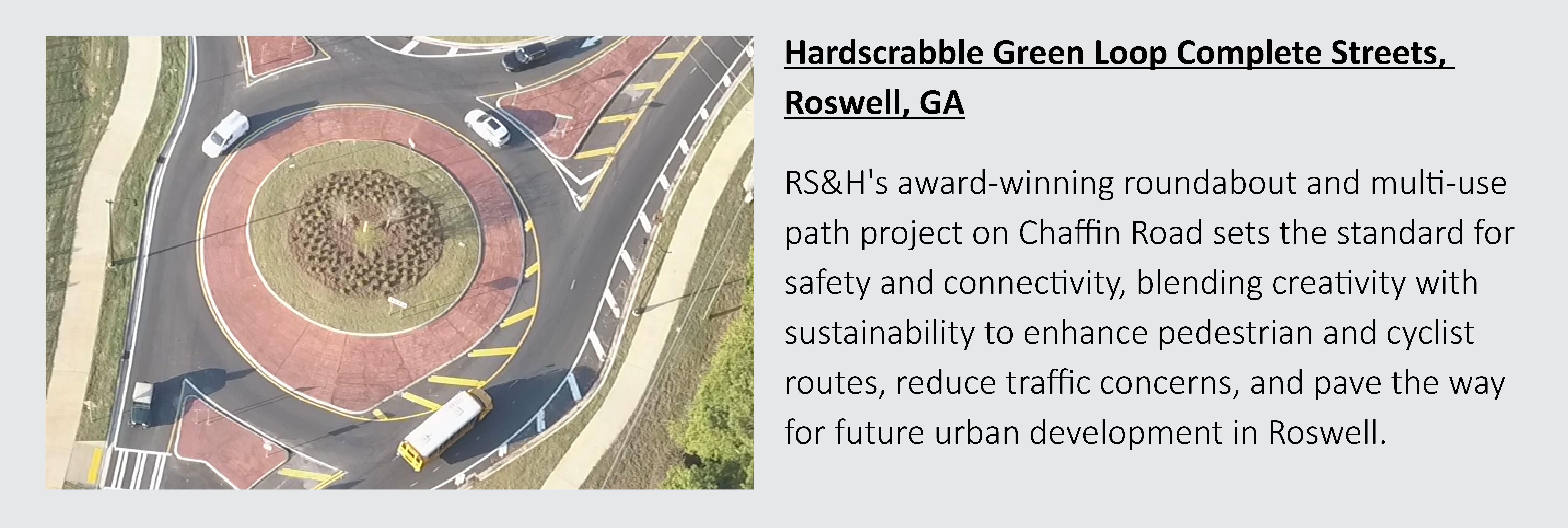
Click on the project titles below to learn more about RS&H roundabout projects.

FAQ: Frequently Asked Questions About Roundabout Design
What are the main benefits of modern roundabouts?
Modern roundabouts reduce severe crashes, improve traffic flow, and lower long-term maintenance costs compared to traditional intersections. By eliminating conflict points and reducing vehicle speeds, modern roundabout design improves safety for drivers, pedestrians, and cyclists while maintaining efficient movement through the intersection.
What are common mistakes in roundabout design?
Common pitfalls in roundabout design include improper geometry, inadequate speed control, insufficient pedestrian accommodations, and poor alignment with surrounding roadways. Designs that prioritize vehicle speed over safety or fail to consider local context and user behavior often underperform and create confusion or safety risks.
What standards guide roundabout design in the U.S.?
Roundabout design in the United States is guided by nationally recognized standards and guidelines, including those published by the Federal Highway Administration (FHWA) and adopted by many state and local agencies. These roundabout design standards address geometry, signage, pavement markings, multimodal safety, and operational performance to ensure safe and consistent implementation.
References:
1. National Academies of Sciences, Engineering, and Medicine. 2023. Guide for Roundabouts. Washington, DC: The National Academies Press. https://doi.org/10.17226/27069.
2. Title: Roundabouts; Website: Insurance Institute for Highway Safety (IIHS); URL: https://www.iihs.org/topics/roundabouts; Accessed: May 14, 2024
3. Title: Traffic Safety Methods: Roundabouts; Website: Washington State Department of Transportation (WSDOT); URL: https://wsdot.wa.gov/travel/traffic-safety-methods/roundabouts; Accessed: May 14, 2024
Originally published: June 20, 2024
Last updated: June 27, 2026
Related Insights
Systems integration is the foundation of successful managed lane programs, connecting technology, operations, and customer experience into one scalable platform.

Together, the firms bring complementary strengths that enhance service capabilities and position RS&H to deliver even greater value to transportation and infrastructure clients across the state.

RS&H and FDOT earned top recognition in the 2026 DBIA Florida Region Project Awards for two transportation projects, highlighting excellence in infrastructure delivery, innovation, and collaboration.
Construction Manager/General Contractor and Progressive Design-Build are qualifications-based selections, involve a single-step approach, and typically require less time and resources from the owner and bidders during the procurement process.