
Mission-Ready Infrastructure, Part 2: Managing Risk, Investment, and Capacity
Accelerating infrastructure delivery is essential, but speed alone does not create readiness.
Military installations depend on interconnected energy, water, communications, digital, transportation, and facility systems. The installation is only as strong as its weakest link, so weakness in any one of those systems can affect an installation’s ability to generate forces, sustain operations, protect personnel, maintain communications, move munitions, and continue performing through disruption.
As infrastructure becomes more complex, leaders must evaluate not only how projects are delivered but also how investments reduce mission risk across an installation.
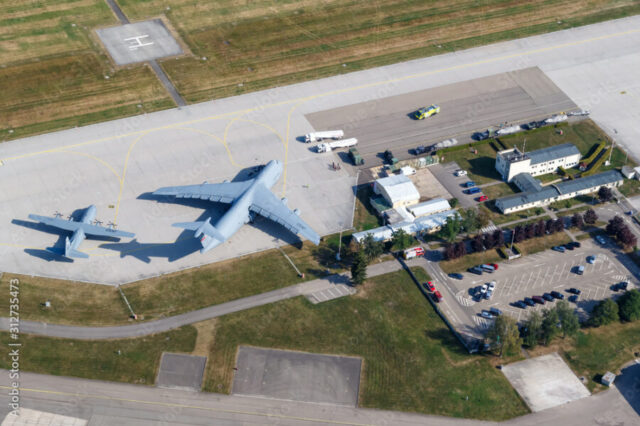
The aircraft may be the visible weapon system. The installation generates the capability.
Viewing the installation through this lens changes how leaders approach security, resilience, project prioritization, and workforce capacity. The goal is not simply to complete projects. It is to preserve and strengthen the infrastructure system that enables mission execution.
Security, Resilience, and Mission Assurance
The same infrastructure systems that generate mission capability can also become sources of mission risk.
DOW agencies are increasingly evaluating facilities and infrastructure investments based on mission outcomes rather than project deliverables alone. Resilience was once discussed primarily through the lenses of sustainability, environmental concerns, and regulatory compliance. Today, federal agencies, particularly the Department of War, increasingly connect resilience to mission assurance: whether an installation can generate forces, sustain operations, protect personnel, maintain communications, move munitions, and continue performing through disruption.
This outcome-based mindset changes how owners evaluate risk. A design cannot be considered successful solely because it meets technical requirements. Owners must also consider whether it can be delivered within an acceptable schedule, whether critical materials and equipment are available through the supply chain, whether the facility’s key systems can be secured, and whether the resulting asset will support the mission throughout its operational life.
As part of this shift, energy, water, communications, cybersecurity, severe weather, supply chain fragility, and aging infrastructure are not treated as independent challenges. Each can affect the ability to operate through disruption. A utility failure may impact communications. A cybersecurity event may affect operational technology. Supply chain disruptions may delay mission-critical maintenance or recovery efforts. Increasingly, the systems are interconnected, and so are the risks.
Viewed through the lens of the installation weapon system, a project becomes more than a building, utility, runway, pier, or maintenance facility. It becomes part of the larger infrastructure network that enables mission execution. Reducing risk begins with understanding those interdependencies and incorporating them into planning, design, and delivery decisions. The installations best positioned to support future missions will consider security, resilience, and mission assurance from the outset rather than treating them as requirements to address later in the project lifecycle.
Managing Infrastructure: From Project Lists to Mission Portfolios
The DOW cannot improve installation readiness through new construction alone. MILCON, sustainment, restoration, modernization, recapitalization, and targeted resilience investments all compete for limited resources, and each carries different funding paths, approval processes, schedules, and operational impacts.
Historically, infrastructure decisions have often focused on individual projects and asset conditions. Which building should be replaced? Which utility should be upgraded? Which pavement section should be repaired? Those questions remain important, but they do not always lead to the best readiness decisions.
As installations become increasingly complex, leaders are adopting a portfolio-based view of infrastructure that connects asset condition to mission criticality, schedule risk, funding constraints, and the consequences of deferred action.
The most important question is not which asset is in the worst physical condition. The most important question is which asset would have the greatest mission consequence if it failed.
That portfolio lens often changes investment priorities. A modest utility modernization effort may reduce more mission risk than a highly visible facility replacement. A communications upgrade may deliver greater operational benefit than a new building. A phased infrastructure investment may preserve future options that short-term decisions would otherwise foreclose.
This is where Operational Master Planning, digital delivery, project controls, and portfolio management begin to converge. Together, they provide leaders with a clearer understanding of mission dependencies, capability gaps, funding requirements, schedule implications, and investment tradeoffs. More importantly, they help transform infrastructure data into decision-quality information that supports mission-focused investment decisions.
The goal is not simply to prioritize projects. The goal is to prioritize capability.
Achieving that goal requires more than funding and planning. It requires organizations with the capacity to evaluate options, make informed decisions, manage risk, and execute increasingly complex programs.
For many Department of War agencies, that capacity is becoming one of the most significant constraints to delivering mission-ready infrastructure.
Workforce Capacity Challenges in Defense Infrastructure Delivery
The strategies discussed throughout this article, collaborative delivery, digital integration, mission assurance, and portfolio-based investment planning, all depend on one critical factor: the capacity to make informed decisions and execute them effectively.
Workforce capacity is often discussed as a staffing challenge; increasingly, it is a readiness challenge.
Even fully funded projects can stall when organizations lack the capacity to define requirements, develop acquisition strategies, review designs, make timely decisions, oversee construction, manage change, and transition completed projects into operation. As infrastructure programs grow more complex, demand on government personnel continues to rise, often without a corresponding increase (and often with a decrease) in resources.
As a result, many organizations are augmenting internal capabilities with program management, scheduling, project controls, portfolio planning, owner’s representative support, and strategic advisory services. These functions help leaders maintain visibility into cost, schedule, risk, and mission impacts while staying focused on the operational outcomes infrastructure investments are meant to deliver.
For senior leaders, the hard tradeoff is that no delivery method can compensate for an unprepared owner. If review authorities, funding decisions, security requirements, operational constraints, and risk tolerances aren’t aligned early, alternative delivery may simply shift confusion earlier in the timeline rather than eliminate it.
The response cannot be to preserve an outdated model in which the owner directs, the consultant designs, and the contractor builds largely within separate spheres. Today’s environment requires the owner, designer, and contractor to manage risk, make decisions, and pursue mission outcomes together.
The strongest project teams increasingly operate like a single enterprise. Early contractor involvement, collaborative estimating, cost transparency, and shared accountability can help teams surface constraints while there is still time to address them.
That collaboration should begin with candid conversations about risk tolerance. Teams need to identify potential conflicts involving scope, cost, schedule, security, constructability, and mission continuity before those risks become post-award problems. Owners don’t need partners who avoid difficult conversations; they need trusted advisors who can explain a decision’s implications and help the team choose a responsible path forward.
Ultimately, workforce capacity is not just about having more people. It is about having the capability to make better decisions faster. Without that capacity, even the best plans remain plans.
Future Trends Shaping Department of War Infrastructure Programs
Over the coming years, Department of War leaders will face increasing pressure to enhance mission readiness while navigating workforce constraints, cybersecurity requirements, resilience expectations, aging infrastructure, and increasingly complex delivery environments.
The reality is that these challenges cannot be solved through better design alone. Mission-ready infrastructure depends on earlier decisions, disciplined owner governance, effective collaboration, secure digital delivery, resilient systems, and investment strategies that connect infrastructure investments to operational outcomes.
For leaders responsible for installation readiness, the questions are becoming sharper:
- Which assets are most mission-critical?
- Where does the greatest mission risk exist?
- Which projects require collaborative delivery approaches?
- Where can digital information improve decision quality?
- Which investments will preserve flexibility for future missions?
- How can limited resources be applied where they generate the greatest operational value?
The discussion is no longer simply about what to build next. It is about how today’s investments can improve readiness, reduce risk, accelerate capability delivery, and position installations to support tomorrow’s missions.
Organizations that succeed will look beyond individual projects and focus on the systems, relationships, information, and decisions that ultimately generate operational capability.
The aircraft may be the visible weapon system. The installation generates capability.
Related Insights
Explore how collaborative delivery and digital integration can accelerate military infrastructure delivery and strengthen mission readiness.
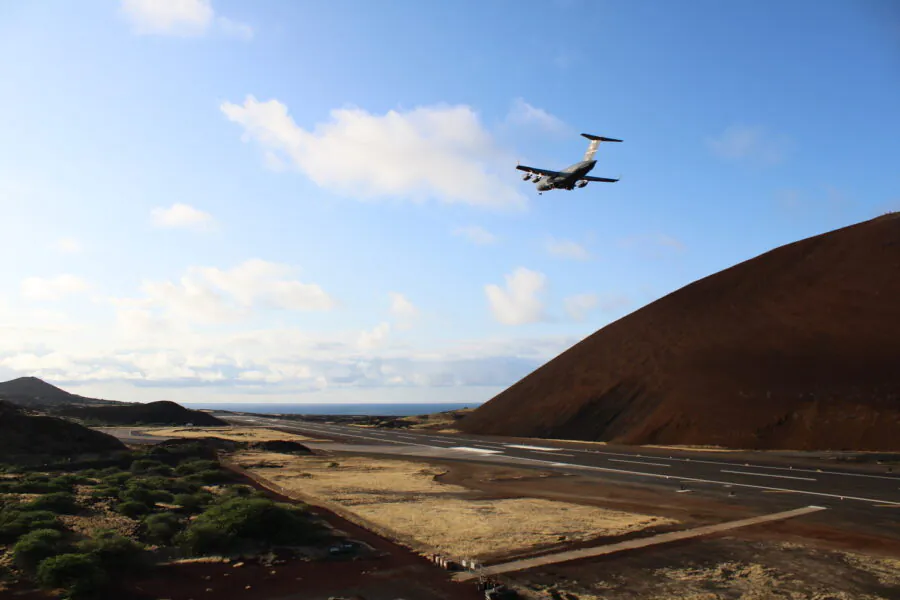
Rich Stump, AIA, LEED AP BD+C, talks through the latest developments and challenges shaping today's federal infrastructure projects.
After dedicating more than 30 years to the United States Air Force, Scott Grainger, PE, PMP, understands the true weight of federal missions.

Tara Pence has quickly progressed from a go-to project planner to a trusted project manager, leading complex planning efforts at Minot Air Force Base and Peterson Space Force Base with excellence.