Help Give Back with Magical Wheelchair-Accessible Halloween Costumes
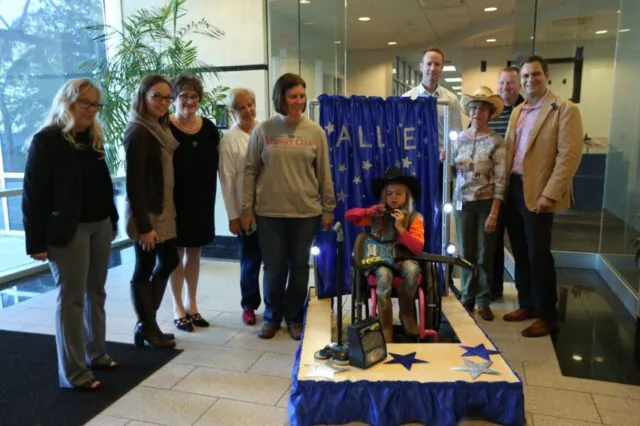
In addition to creating buildings and bridges, RS&H associates are committed to fostering meaningful community interactions with individuals, groups and families alike. That’s why associates have partnered with Jacksonville’s Independent Living Resource Center (ILRC) to design and build wheelchair-accessible Halloween costumes for the past five years.
This year, the work continues, with safety measures in place to keep everyone safe – while still realizing the Halloween dreams of children in the community.
Volunteers Bring It All Together
Supported by the RS&H Elevate Fund, the team collaborates each year across multiple disciplines to make Halloween visions a reality. In the past, designers have crafted a Cinderella carriage, a Hogwarts train for a conductor, and many more costumes. While the result looks effortless, the team works diligently behind the scenes to execute concepts, from the initial design stages to the final reveal.
“Dedicated volunteers are behind the amazing costumes we are able to give the children,” said Brandon Pourch, an architect and organizer of the event. “The collaboration between the team and the willingness to take on different roles is what allows us to create an impact every year.”
Dynamic Roles Available from Design to Reveal
There are many roles needed to bring each child’s costume together, and volunteers can choose the roles that meet their interests and best leverage their talents. Once the team knows what kinds of designs they will be working on for the year, phase one ensues.
Phase One: Design
- This phase is primarily virtual, allowing any volunteer to join in and help with the project.
- Designers can contribute to a virtual mural board platform by adding images and sketching out ideas. Revit users can assist through the technology as well.
- Those with an eye for design can contribute by selecting Behr paint colors and accessory items to accompany each Halloween costume.
Phase Two: Construction
- This phase also poses minimal risk, as all work can be done in private homes and workspaces.
- Skilled volunteers with their own power tools and workspaces can aid in this step of the process by cutting the costume patterns, constructing them out of rigid foam insulation, assembling the pieces and sanding the creation to be ready for paint.
Phase Three: Decoration & Costumes
- This phase is done by volunteers in an outdoor location, while maintaining proper distancing measures. Decoration can be done in two to three work sessions, beginning in the early afternoon.
- Volunteers are welcome to decorate at any point during the scheduled session and can leave as needed.
- Volunteers can also help by finding costumes online or sewing costumes to go along with the wheelchair-accessible Halloween designs.
Handling Design with Care and Caution
While the process typically involves some contact, the teams are taking measures this year to ensure safety is top of mind. With extra care and caution, associates will deliver these impactful moments to the children and their families from a distance.
For the entirety of the design and construction process, volunteers will also maintain a safe distance, wear masks while collaborating, and utilize virtual options to the maximum capability to adhere to health and safety guidelines.
This year, with a few extra precautions, each creation will be guaranteed to make Halloween that much brighter for the children of Jacksonville.
Learn more about RS&H’s commitment to community involvement.
Related Insights
In this episode of AEC Perspectives, Max Marble, PE, CM, LEED AP, Senior Principal Airfield Engineer at RS&H, explores what it takes to see the whole picture when planning major airport redevelopment.
While each project is unique, and many factors influence design, we’ve identified six factors to consider when adding or upgrading a facility. We’ll take a deeper look at each factor, including what it means to design, how to incorporate the idea, and examples from our previous projects.
In this role, Twibell will lead the design of airfield electrical, navigational aid, power distribution and communication systems for aviation clients.
At Denver International Airport, climate resilience is moving from planning to practice. The South Worldport project demonstrates how RS&H used Envision to translate airport-wide climate risks and adaptation strategies into practical design and operational decisions.