
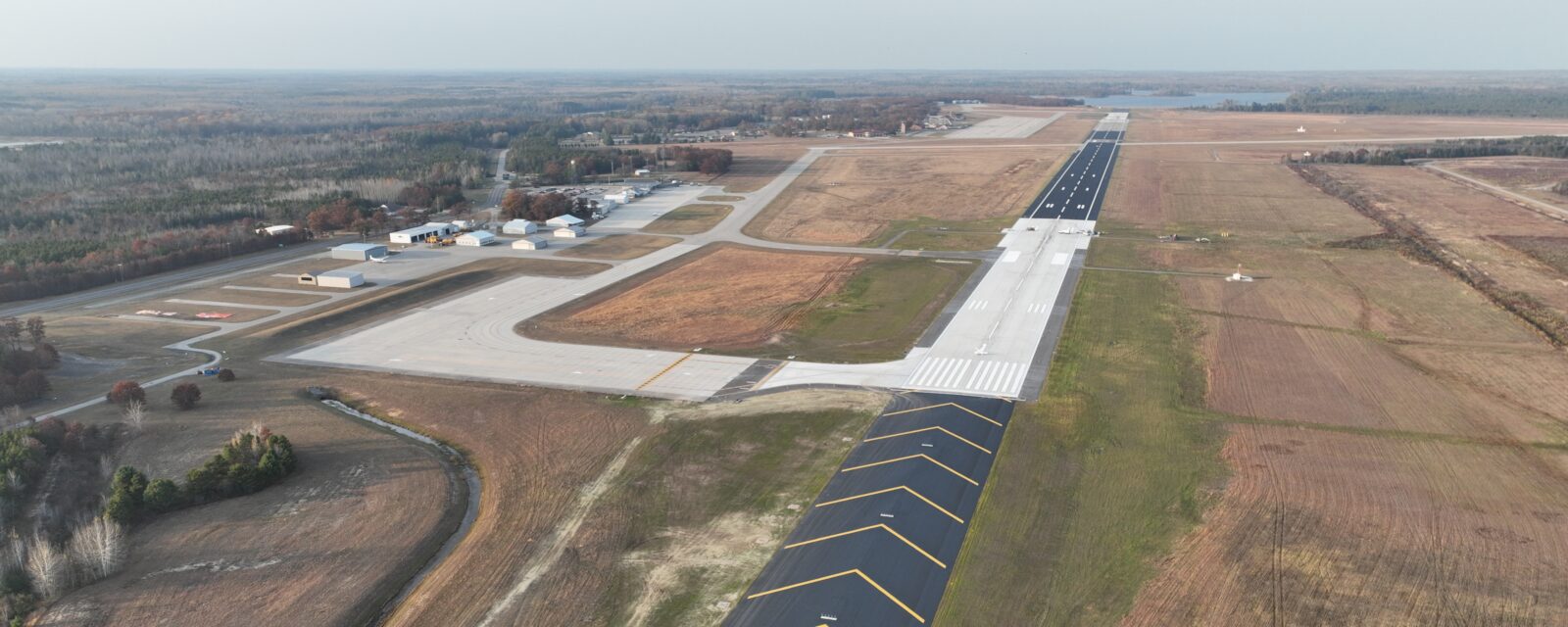
Alpena Combat Readiness Training Center (CRTC) Runway 1-19 Rehabilitation
Project Details
Location
Alpena, MI
Focus Areas & Services
At Alpena County Regional Airport (APN), maintaining a reliable runway is critical for both commercial aviation and military readiness. As a shared-use airfield supporting the Michigan Air National Guard’s Alpena Combat Readiness Training Center (CRTC), the airport serves a unique dual mission. In addition to commercial aircraft, the airfield can support the most advanced aircraft in the military’s inventory: the F-35 Lightning II fighter aircraft, the KC-46 Pegasus refueling aircraft, and the C-17 Globemaster transport aircraft.
RS&H has served as Alpena County Regional Airport’s aviation consultant since 2007, supporting more than 29 projects across planning, airfield, building, and infrastructure disciplines. Through this long-standing partnership, RS&H has played a key role in the ongoing rehabilitation of Runway 1-19, helping preserve the airport’s ability to support both civilian and military operations.
The need for improvements became apparent due to significant pavement deterioration, including cracking and spalling. RS&H worked closely with Alpena County, the Alpena CRTC, FAA, and the National Guard Bureau to develop a rehabilitation strategy that addressed immediate pavement concerns while supporting long-term operational needs. Early coordination helped secure design funding and laid the foundation for a runway improvement program valued at $60 million. We facilitated a shared solution that was funded by the Department of Defense and Federal Aviation Administration.
The rehabilitation program includes runway reconstruction, aircraft arresting system replacements, and other infrastructure upgrades needed to support both FAA and Department of Defense requirements. Construction was carefully phased to minimize impacts to commercial air service and military training operations while maintaining airport functionality throughout the program.
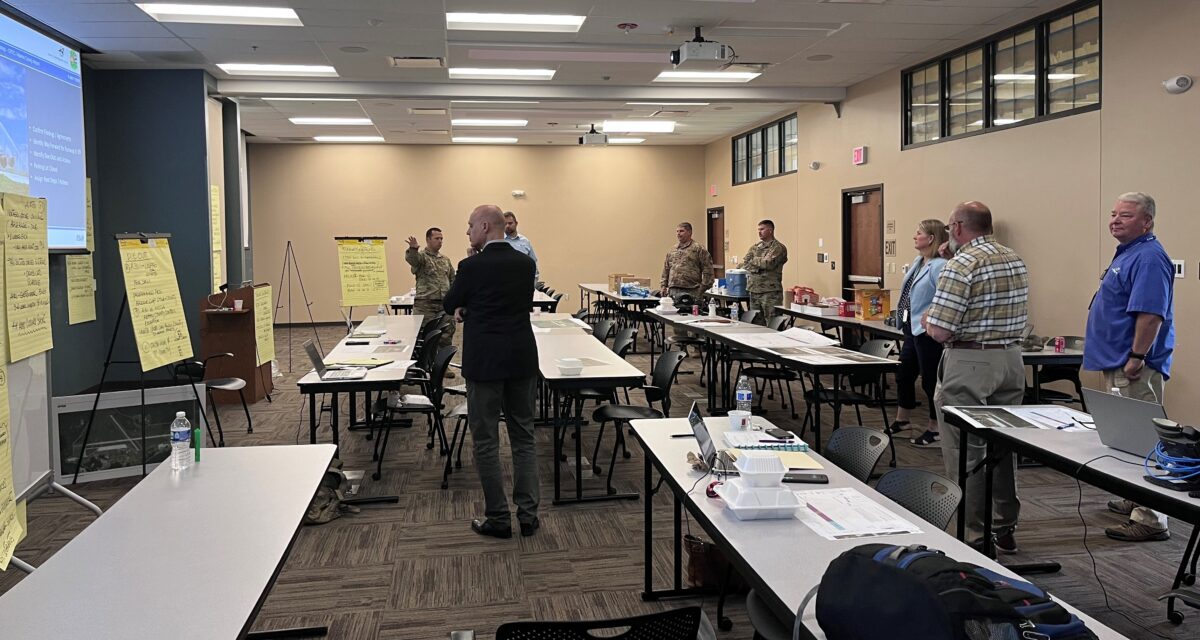
RS&H supported the program from design through construction, providing procurement coordination, construction administration, and construction phase services. The team coordinated closely with specialty vendors, contractors, and federal, state, military, and local agency stakeholders to manage submittals and RFIs, navigate complex multi-agency requirements, resolve issues efficiently, and keep the program moving forward.
The result is a runway rehabilitation that extends the useful life of Runway 1-19 by approximately 25 years, ensuring continued support for commercial air service, military readiness, and the thousands of personnel who train at the Alpena CRTC each year. The project demonstrates how strategic planning, stakeholder coordination, and phased construction can successfully modernize critical infrastructure while maintaining operations at a shared-use airport.
Public Resources:
Related Projects
RS&H provided multidisciplinary design services for a new F-35A maintenance hangar and supporting airfield infrastructure at Eglin Air Force Base. The project enhances mission readiness with resilient, high-performance facilities designed to support advanced aircraft maintenance and testing operations.

RS&H led the design of the new JIATF-S Headquarters at Naval Air Station Key West, supporting a mission critical to combating illicit trafficking and enhancing regional security. The resilient, mission-focused facility is designed to meet stringent security requirements and withstand Key West’s challenging coastal environment.
RS&H designed a 130,000-square-foot research, development, and testing facility at Cape Canaveral Space Force Base to support the U.S. Navy’s Trident II D5LE2 missile modernization program. The project balanced complex resiliency, environmental, and stakeholder requirements while advancing critical national defense capabilities.