
From Introduction to Integration: How Agencies Are Evolving Managed Lanes into Modern Mobility Systems

Less than a decade ago, for many states, tolling and managed lanes were still considered new concepts—tools to be introduced carefully, explained thoroughly, and positioned as optional mobility enhancements. Today, that conversation has fundamentally changed.
Across the United States, agencies are no longer asking whether managed lanes make sense. Instead, they are asking a far more complex question: How do we implement managed lanes in a way that integrates policy, pricing, technology, and regional mobility into a single, cohesive system?
From Market Introduction to Mobility Strategy
The foundations of managed lanes still stand today. Agencies must still analyze their market, define their customers, test messaging, build awareness, and continuously engage stakeholders. For example, back in 2012 when LA Metro converted it’s I-10 and I-110 HOV lanes to dynamically priced express lanes, it didn’t just build infrastructure—it invested in understanding its customers. RS&H led a comprehensive post-assessment that surveyed facility users to measure acceptance across HOV and non-HOV segments. The findings confirmed that thoughtful market introduction—testing, measuring, and adjusting—remains the foundation for long-term managed lane success.
However true those foundational elements still are, the industry has matured. Managed lanes are no longer introduced simply as a new transportation option; they are positioned as a core component of a region’s mobility strategy. This shift reflects a broader understanding: managed lanes are not just infrastructure; they are actively managed systems designed to optimize performance.
The Evolution of Pricing: From Revenue Tool to Performance Engine
Historically, tolling is viewed as a mechanism for revenue generation. But as managed lanes have evolved, pricing has taken on a far more critical role. Some primary benefits of dynamic pricing include:
- Filling funding gaps
- Relieving congestion
- Meeting public demand for reliable travel
Those benefits remain valid, but today pricing is understood as something more: the operating system of managed lanes. Dynamic pricing enables agencies to:
- Maintain target speeds and throughput
- Influence traveler behavior in real time
- Balance revenue and performance objectives
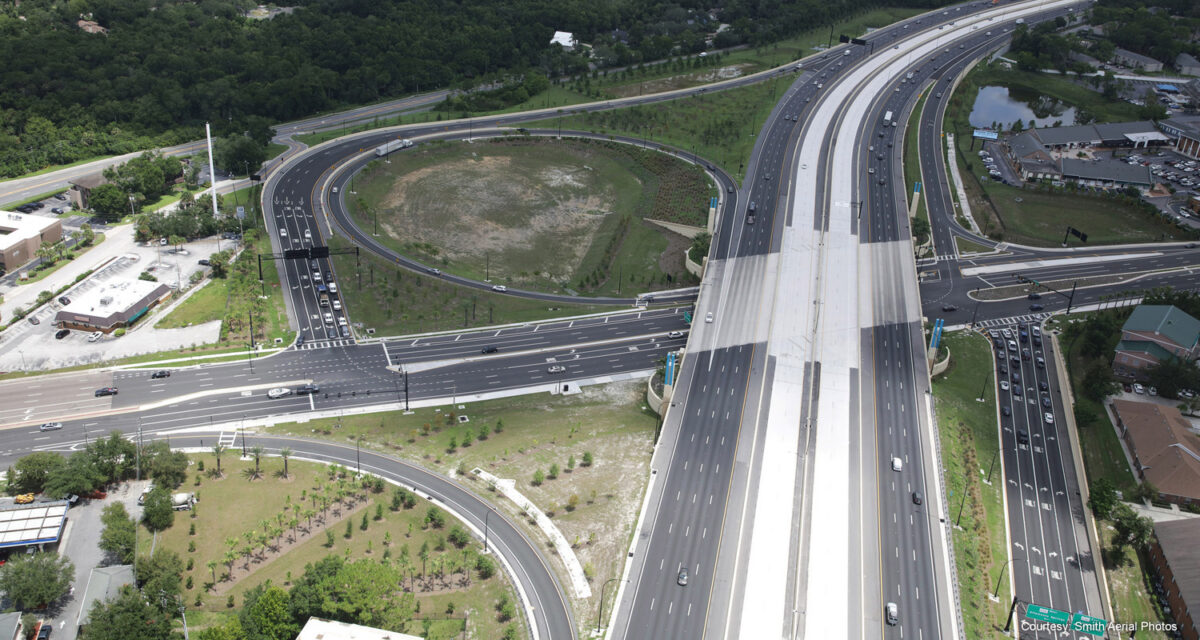
The challenge agencies face today is not whether to implement dynamic pricing, but how to structure it to balance operational effectiveness, financial sustainability, and public understanding and acceptance. Florida’s I-4 Express in Orlando illustrates this evolution firsthand. The 21-mile, $2.4 billion corridor launched with a fixed introductory toll rate before transitioning to full dynamic pricing—an intentional strategy to build public familiarity while positioning the system for long-term performance management. This phased approach reflects the industry’s broader shift: pricing is no longer just about revenue; it is about operating the system.
Image courtesy of Smith Aerial Photos
Another early insight that remains central today is that travelers value reliability over speed. Managed lanes succeed because they provide: predictable travel times and consistent performance, even during peak demand.
This principle continues to drive managed lane adoption, but today, agencies must ensure that reliability is:
- Preserved through accurate pricing
- Protected through conformance and enforcement
- Supported by real-time operations
Where the Industry Has Advanced: The New Requirements for Success
While the foundational principles of managed lanes remain intact, today’s programs are significantly more complex. Policy and legislative readiness play a large role in managed lanes in today’s climate. Agencies must ensure authority for dynamic pricing, legal frameworks for HOV declaration and enforcement, and data governance and privacy protections. Without these elements, modern managed lanes cannot operate effectively.
Another requirement for success falls into the technology category. With technology advancing every day, managed lanes now rely on advanced pricing algorithms, real-time traffic data, automated enforcement, and connected infrastructure and vehicles. This represents a shift from static infrastructure to digitally enabled transportation systems.
New facilities are no longer standalones. Agencies must consider regional integration and interoperability to maintain successful systems, including cross-state interoperability, corridor continuity, and even customer account integration. Projects such as the expansion of managed lane corridors across state lines highlight the importance of treating tolling as a regional system rather than an isolated facility. Charlotte’s growing express lanes network is a compelling example of regional integration in action. What began with the I-77N Express Lanes has expanded into a multi-corridor system that includes the I-485 eastern corridor and will further expand onto US 74 and I-485 West with potential future connections extending onto I-77 South and into South Carolina. Each new corridor project must be planned not in isolation, but as part of a seamless regional network with consistent access design, coordinated pricing, and unified customer experience across state lines.
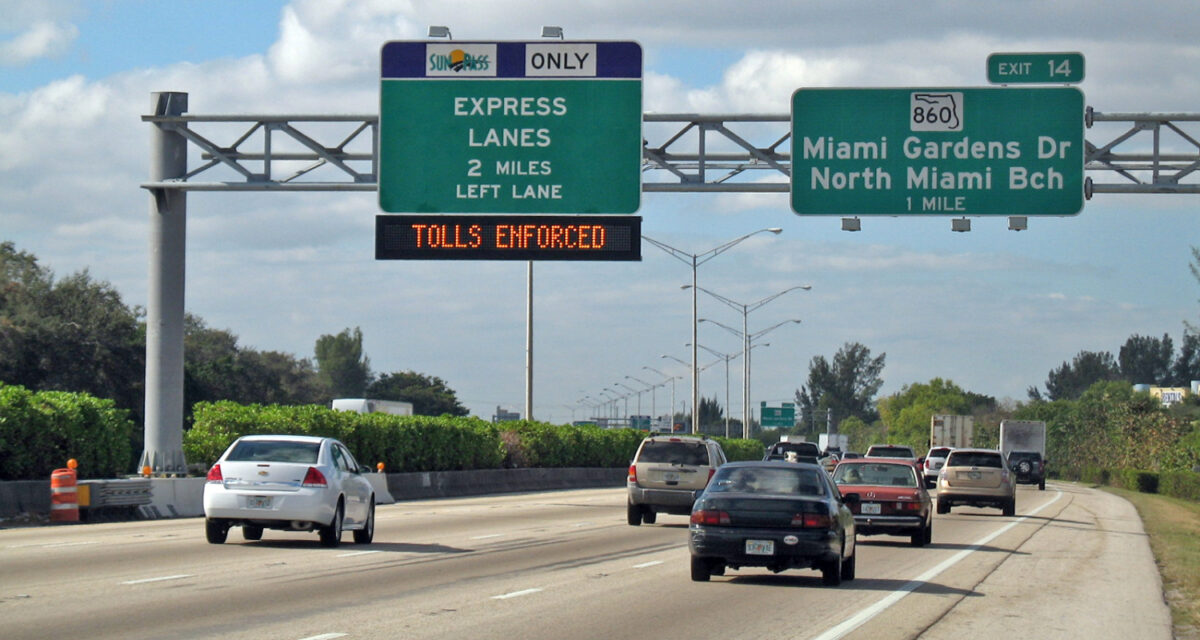
Lastly, customer experience is not a core metric of success. Today’s programs must deliver transparent pricing structures, predictable user experiences, and seamless payment systems. Customer trust is no longer built solely through communication but also through consistent system performance and reliability. As an example, Southeast Florida’s I-95 Express Lanes became one of the nation’s first dynamically priced managed lane facilities. When toll prices increase, it’s because traffic on the express lanes is also up, and FDOT is attempting to deter further traffic delays for users. The system’s evolution from a 7-mile pilot into a regional express lanes network argues that when users experience reliability firsthand, acceptance follows.
A New Era of Managed Lanes
The managed lanes industry has moved beyond introduction and into integration. What began as a congestion-relief tool and a new revenue mechanism has evolved into a policy-driven, tech-enabled platform that is a core element of modern mobility networks.
For agencies entering tolling for the first time or expanding into managed lanes, the path forward is clearer than it was a decade ago, but no less complex. Success requires:
- Strong policy and legislative foundations
- A clear pricing strategy
- Integrated technology and operations
- A focus on regional mobility and customer experience
The lessons learned from early adopters have created a roadmap. The challenge now is executing that roadmap in a way that reflects the expectations and opportunities of today’s transportation environment.
Let’s Build the Future of Managed Lanes Together
Every region’s path to integrated mobility is unique, and so are its challenges. Whether you’re entering tolling for the first time or expanding a managed lane network across corridors and state lines, RS&H’s Tolls Service Group is ready to help you turn strategy into reality.
Let’s talk about your pricing approach, policy foundations, and integration goals. Connect with our Tolls Service Group to discuss managed lanes, tolling strategy, or the implementation challenges ahead.
Related Insights
Together, the firms bring complementary strengths that enhance service capabilities and position RS&H to deliver even greater value to transportation and infrastructure clients across the state.

Technology is redefining how AEC firms create value, but success still depends on human expertise and judgment. In this episode of AEC Perspectives, Jessica Chambers and Jess Baker share how RS&H is leveraging AI, digital solutions, and responsible governance to help clients achieve smarter, more efficient outcomes.
John Lengel Jr., PE, ENV SP, Vice President and National Discipline Leader at RS&H, received the 2026 Florida Airports Council J. Bryan Cooper Vision Award. The award recognizes his leadership and lasting contributions to aviation environmental stewardship, sustainability, and resilience.

RS&H and FDOT earned top recognition in the 2026 DBIA Florida Region Project Awards for two transportation projects, highlighting excellence in infrastructure delivery, innovation, and collaboration.