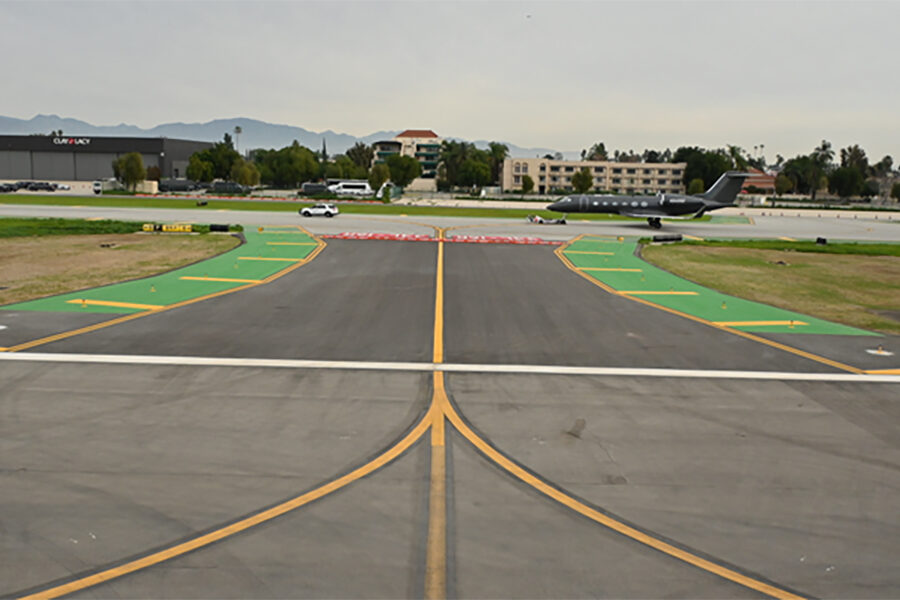
Future-Proof Your Airfield Through Smart Single-Runway Airport Construction
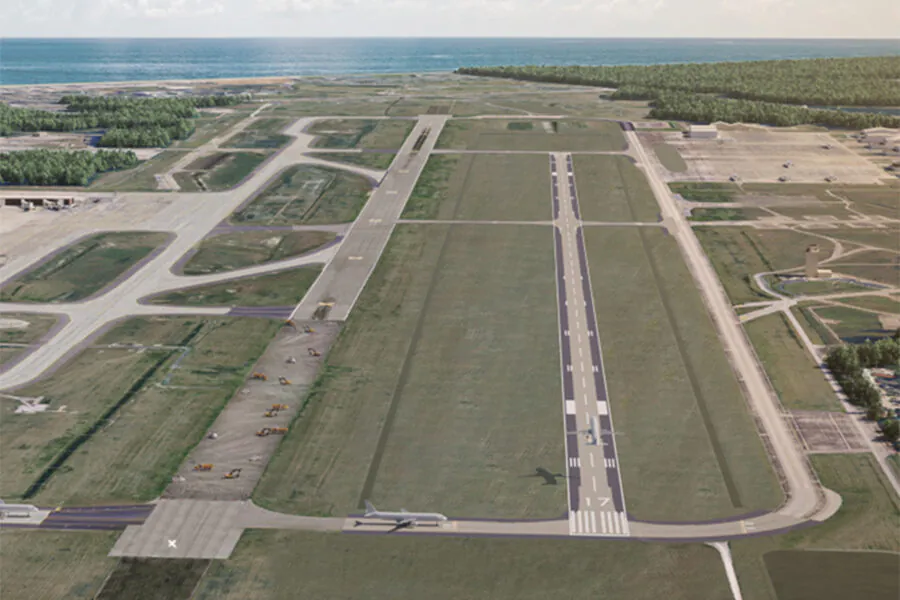
Rebuilding the only bridge into a city without ever closing it—that’s the reality single‑runway airports face when major rehabilitation can’t interrupt daily operations.
For these airports, “closed for construction” isn’t an option. They are essential economic engines, sustaining regional mobility and commerce. But even the most critical infrastructure ages. Pavement deteriorates. Airfield systems reach the end of their lifecycle. And eventually, incremental repairs no longer keep pace with operational demand.
At RS&H, we see these challenges not as constraints but as catalysts for innovation. Our recent work at Myrtle Beach International Airport (MYR) demonstrates what’s possible when planning discipline, technical creativity, and strong partnership come together. With the right strategy, even a single‑runway airport can rebuild its most vital asset—without diverting traffic or disrupting the stakeholders who rely on it every day.
The Challenge: When Pavement Meets Reality
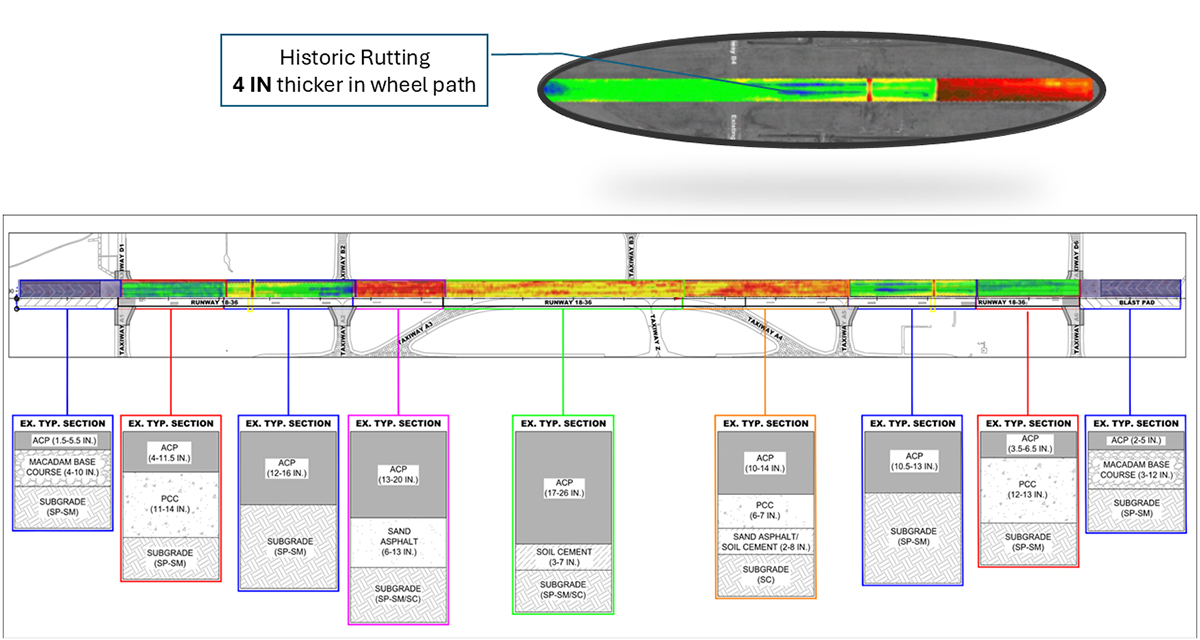
Beneath many legacy airfields lies a complex structural history. At MYR, geotechnical investigations revealed that Runway 18‑36 was not a uniform pavement section—it was a mosaic of nine distinct zones. With its origins dating back to World War II and decades of extensions, overlays, and rehabilitations, the runway had become a multilayered system exhibiting inconsistent performance and aging materials throughout.
Condition data underscored the urgency. Rutting reached depths of up to four inches in the wheel path, a clear sign of structural distress. Pavement Condition Index (PCI) projections showed the runway trending toward “Fair” or “Poor” within four to six years—a trajectory that posed increasing risk for an airport reliant on a single runway.
The conclusion was clear: a full‑depth runway reconstruction was the only responsible long‑term solution.
But that raised the defining question—how do you rebuild your only runway while keeping one of the nation’s busiest single‑runway airports fully operational?
The Strategy: Converting Taxiways to Temporary Runways
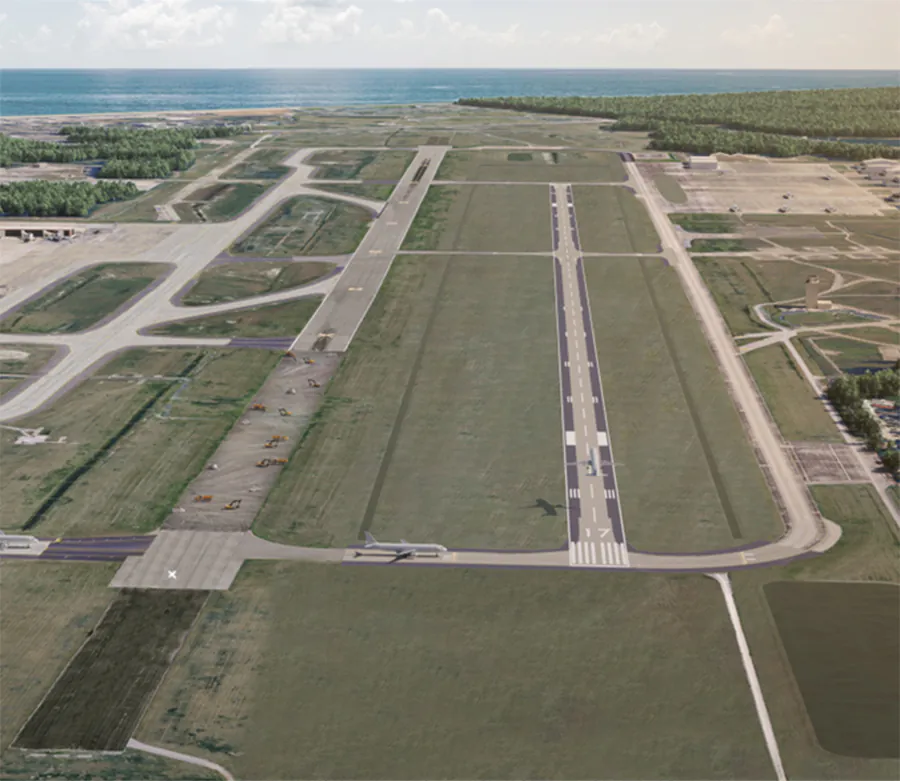
The solution wasn’t simply rehabilitation—it was rethinking the geometry and functionality of the airfield to create long‑term flexibility. Rather than designing a temporary workaround, we designed an asset that could support MYR both today and for decades to come.
At the heart of the approach was the construction of a new parallel taxiway (Taxiway B), intentionally designed to serve as a temporary runway during reconstruction. Delivering this solution required careful technical foresight:
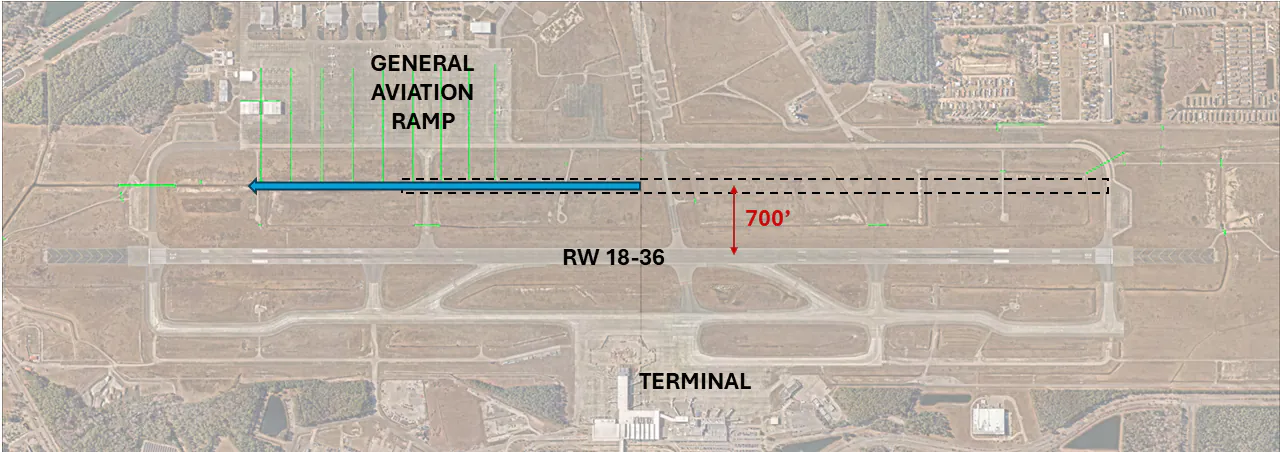
- Purpose‑Built Geometry: Taxiway B was constructed with a 50‑foot concrete keel section and 25‑foot asphalt shoulders capable of supporting full aircraft loading.
- Infrastructure Installed Upfront: In‑pavement lighting, conduit, and flush‑mounted taxiway edge lights were integrated during initial construction to allow for rapid conversion to a runway.
- Strategic Separation: By designing a 700‑foot separation—well beyond the 400‑foot minimum for a parallel taxiway—MYR preserved its ability to convert Taxiway B into a fully independent parallel runway in the future. FAA standards require at least 700 feet for simultaneous VFR operations, making this geometry a forward‑thinking investment in capacity and resilience.
This strategy will enable MYR to transition operations to the temporary runway during the reconstruction phase, ensuring uninterrupted access for a full‑depth rehabilitation of the primary runway—without compromising operational efficiency or safety.
Navigating the Funding Landscape
Rebuilding a runway is a major capital undertaking, and navigating the FAA funding ecosystem is central to project success. Understanding available funding streams can directly influence both schedule and scope.
- Bipartisan Infrastructure Law (BIL): These funds have accelerated airfield projects nationwide, enabling improvements that might otherwise remain in long‑term planning.
- Airport Improvement Program (AIP): Entitlement and discretionary AIP funds continue to serve as the backbone of airfield development programs.
- Strategic Banking: At MYR, success depended on a coordinated effort to bank entitlements and discretionary AIP funds over multiple years, aligning resources with the needs of this major reconstruction effort.
Early and consistent coordination with the FAA proved equally essential. By presenting a clear single‑phase reconstruction plan—made possible by the temporary runway—we demonstrated a safer work zone, reduced operational risk, and improved quality control. This clarity builds confidence with funding partners and reinforces that federal investments are supporting a resilient, future‑ready asset.
Maintaining Operational Continuity
Construction at a single runway airport is a high stakes ballet—every movement must be choreographed to preserve safety and efficiency.
Collaborative Problem Solving
During the design phase at MYR, questions emerged about whether pilots would easily recognize Taxiway B as a runway once converted. Rather than rely on assumptions, we went directly to the source. Through coordination with chief pilots, we validated our lighting, marking, and signage plans. Their feedback confirmed that the proposed configuration would be safe, intuitive, and familiar—resolving operational concerns well before construction began.
Operations Over Isolation
Construction decisions ripple across the entire airfield. For example, the temporary runway alignment conflicted with existing drainage from the General Aviation (GA) ramp. Instead of treating this as a standalone issue, we approached it from a system‑wide perspective.
We redirected the drainage flow and reconstructed the ditch line using crushed concrete from the old pavement—resolving a long‑standing hydraulic issue, improving safety by eliminating direct ramp access to the runway, and supporting sustainable material reuse. 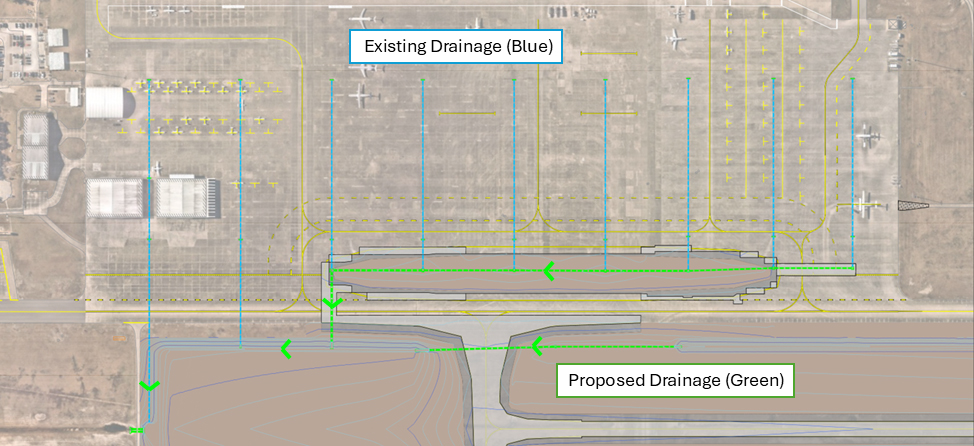
Building for the Future
There is no “second option” when your community depends on your airport. With only one runway to sustain operations, you need a partner who understands the stakes and delivers solutions—not uncertainty.
At RS&H, we believe in transparency, technical rigor, and providing the honest guidance needed to make the best decisions for your facility. Whether it’s navigating complex pavement conditions, structuring multi‑layered funding strategies, or designing creative operational workarounds, our team is committed to instilling confidence at every step.
Your airfield is more than concrete and asphalt—it’s your region’s gateway to the world. Let’s ensure it’s built for the demands of tomorrow.
Ready to future-proof your airfield?
Contact RS&H today to learn how our aviation engineering experts can support your next airfield improvement program.
Meet the Author

Zak Seed, PE, is an Airfield Project Manager at RS&H, where he leads major airfield design and construction programs with a focus on resilient and operationally efficient solutions. He serves as Engineer of Record and Deputy Project Manager for the MYR Runway Rehabilitation Program—his flagship role—and also acts as an Engineer of Record and Design & Production Manager for the Charlotte Douglas International Airport Fourth Parallel Runway Program while supporting key initiatives at Hartsfield-Jackson Atlanta International Airport. His background includes significant airport and military airfield work, supported by a B.S. in Civil Engineering from the University of Miami and an MBA from the University of Illinois Urbana-Champaign.
Related Insights
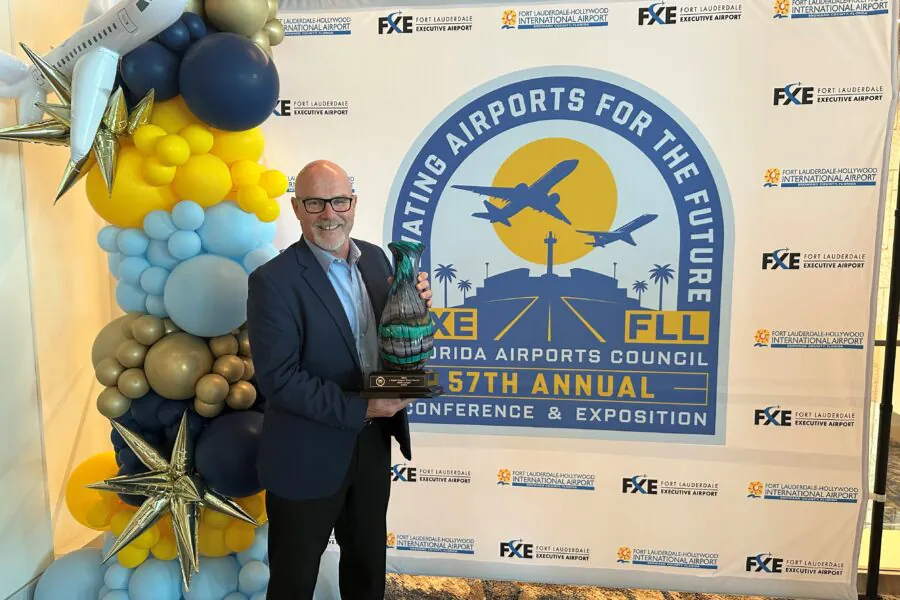
John Lengel Jr., PE, ENV SP, Vice President and National Discipline Leader at RS&H, received the 2026 Florida Airports Council J. Bryan Cooper Vision Award. The award recognizes his leadership and lasting contributions to aviation environmental stewardship, sustainability, and resilience.
Mike Rudzinski, AIA, NCARB, explores the trends shaping the next generation of airports, from smarter wayfinding and wellness-focused spaces to advanced air mobility, and how innovative terminal design is creating better passenger experiences.
Growing in Lafayette, RS&H combines local connection with national expertise—supporting the community through partnerships, student engagement, and transformative work at Lafayette Regional Airport.
Upgrading critical taxiways at one of the world's busiest general aviation airports required careful planning, strong collaboration, and constant attention to construction safety. At Van Nuys Airport, RS&H delivered the upgrades while minimizing operational disruptions.