Mobility Hub Experts
Mobility hubs are station areas of varying sizes that provide multimodal connectivity. They integrate safe pedestrian connection and waiting areas between modes, provide seamless access to local bicycle and pathway networks, serve as transfer points to local and regional transit, and offer properly sized parking facilities for short- and long-term trips. Mobility hubs facilitate equitable mobility to a wide range of people with varying ages, incomes, and physical abilities. RS&H planners, engineers, and designers are experts at all phases of mobility hub delivery. At RS&H, our planners, engineers, and designers excel in every aspect of mobility hub development. We collaborate with state transportation departments, transit agencies, private entities, and local governments to plan, design, and construct mobility hubs.
 Since 2013, RS&H has spearheaded the design of mobility hub projects for the Colorado Department of Transportation (CDOT), aiding in the development of the Department’s overall interchange/mobility hub vision and implementing phased improvements. The I-25/SH7 Mobility Hub project will serve as a foundational step toward their goal of developing a high amenity mobility hub advancing the State’s ten-year plan and new initiative of reducing greenhouse gas emissions.
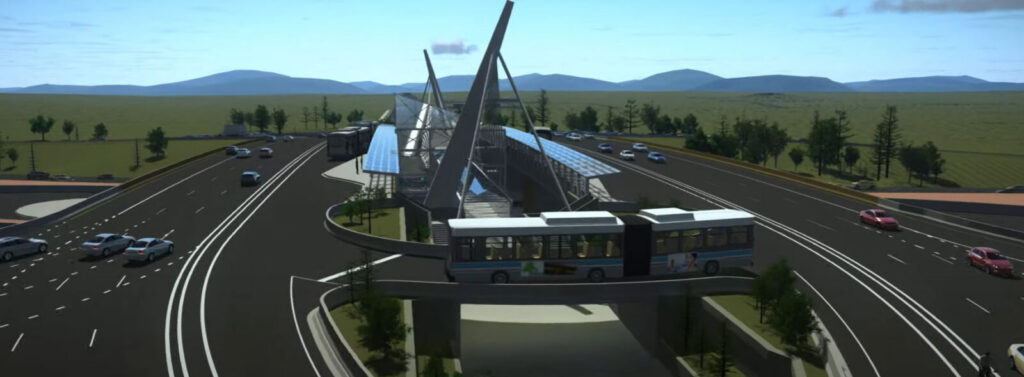
 RS&H designed a southbound ramp along I-25 between Lincoln and Ridgegate to facilitate Bustang bus service, as part of the Colorado Department of Transportation’s efforts to redefine the conventional park-and-ride transit stop through its Mobility Hub initiative. This transit improvement project involves the construction of slip ramps along the I-25 northbound off-ramp and southbound on-ramp, along with the installation of a pedestrian bridge connecting the two transit stops and sidewalks.
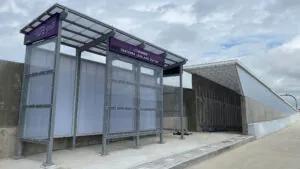 RS&H is providing design services to the Colorado Department of Transportation for the North I-25 / Centerra-Loveland Mobility Hub as part of a $500M Design-Build project encompassing a fourteen-mile stretch of North I-25 in Northern Colorado. Positioned along a new segment of Kendall Parkway, north of US Highway 34, the Centerra-Loveland Mobility Hub lies at the heart of the Transit Oriented Development, drawing inspiration from the Centerra Metro District and Loveland. It stands as the first center-loading mobility hub along the I-25 North corridor.